UBTECH and MetaX raised $70M for a robot chip before any silicon
Xixuan Chuangzhi, co-founded by UBTECH and MetaX, raised a 500 million yuan angel round at a 4 billion yuan valuation for a robot SoC that merges cognition and motion control and targets NVIDIA's Thor, with a product due in 2028.
On November 12, Xixuan Chuangzhi, an embodied-AI edge chip company co-founded by UBTECH and MetaX, announced a 500 million yuan angel round at a post-money valuation of 4 billion yuan. Qiming Venture Partners and Matrix Partners China co-led, with Heli Capital, CDH Longcore and SAIC Hengxu among the followers.
Two listed founders
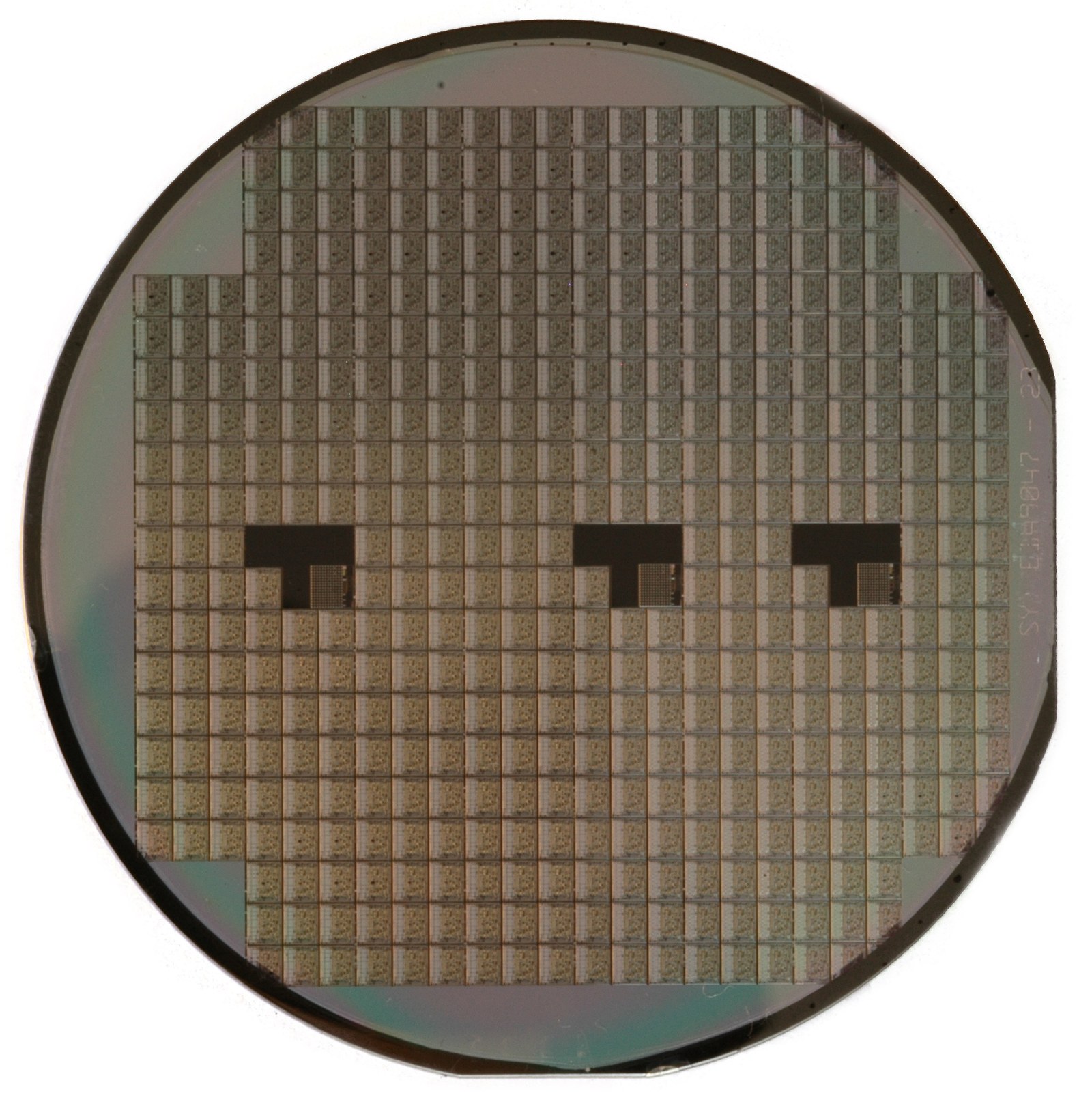
The company was set up in May 2026 with a clear split: MetaX and UBTECH each hold 35.01%, with Fenglong holding 4.7%. MetaX makes domestic GPUs; UBTECH is a Hong Kong-listed humanoid maker.
Management reflects the division of labour: MetaX founder Chen Weiliang is chairman, UBTECH founder Zhou Jian is vice chairman, and the CEO is Yang Xianbo, formerly a senior vice president at H3C. At signing, both sides described it as a deep fusion of compute and body — one bringing GPU architecture, the other tens of thousands of robots generating real-world data and requirements.
What the chip is meant to be
The first chip is positioned as a robot SoC integrating cognition and motion control, with an explicit goal: comprehensively surpass NVIDIA's Thor. It uses a domestic GPGPU architecture and is defined around multimodal perception, decision-making and motion coordination.
The "one SoC" idea responds to today's two-chip norm: one chip for vision-language inference, another for real-time motion control. Merging them cuts cost, latency and board complexity; the difficulty is that the two workloads have different compute profiles, so power and real-time requirements must be traded off.
The schedule: a development and validation platform for industry partners in 2027, and the first SoC plus a full solution in 2028. Early applications target semi-structured environments.
A 4 billion yuan valuation for a company with no product is not unusual in semiconductors: investors price the team's record, the shareholders' resources and a fairly certain market. The real test comes after tape-out — whether the first silicon can run mainstream models.
Why now
Robot compute is highly concentrated today: NVIDIA's Jetson Thor is close to a default, and models such as GR00T are tuned around it. For robot makers that creates two problems — BOM cost locked to one supplier, and product timing tied to that supplier's delivery cycle.
For domestic GPU makers, robotics is a relatively certain new market: shipments are growing, and customers will pay a premium for customisation. That is why an angel round can price the company at 4 billion yuan — investors are buying a position in the localisation of robot compute, not current revenue.
There is also synergy: UBTECH has real sites and data for early validation, and MetaX has GPU architecture and tape-out experience. Splitting the work in half is faster than each building a team from scratch.
Another practical issue: the customers are robot makers, and there are not many of them. China has a few dozen humanoid companies, and far fewer that buy at volume, which puts a much lower ceiling on unit sales than in phone chips.
The risk is in the timeline
A first product in 2028 is more than two years away. Chip industry rules apply: a tape-out costs tens of millions and a failure sets you back six months; toolchains and ecosystems take longer than silicon, because developers must be willing to port existing models and code — usually measured in years.
The benchmark is also moving. By 2028, Thor will be several generations on, and the compute demands of robot models will have changed. Defining a chip today for a 2028 market is the inherent difficulty of this kind of project.
The direction is clear enough: robot companies are moving from buying compute to defining it. Whether this works will not be decided by the first chip's performance but by how many robot makers are willing to swap out their main controller by 2028.
This piece summarizes public reporting and did not independently verify vendor demos or experimental data. Not investment advice.