Reachy Mini Gets Wheels, a Phone App and Personality-Swapping Hats
Pollen Robotics and Hugging Face launched Reachy Mini Level Up: a $149 self-balancing base, a phone app, and $35 NFC hats that switch personalities and apps.
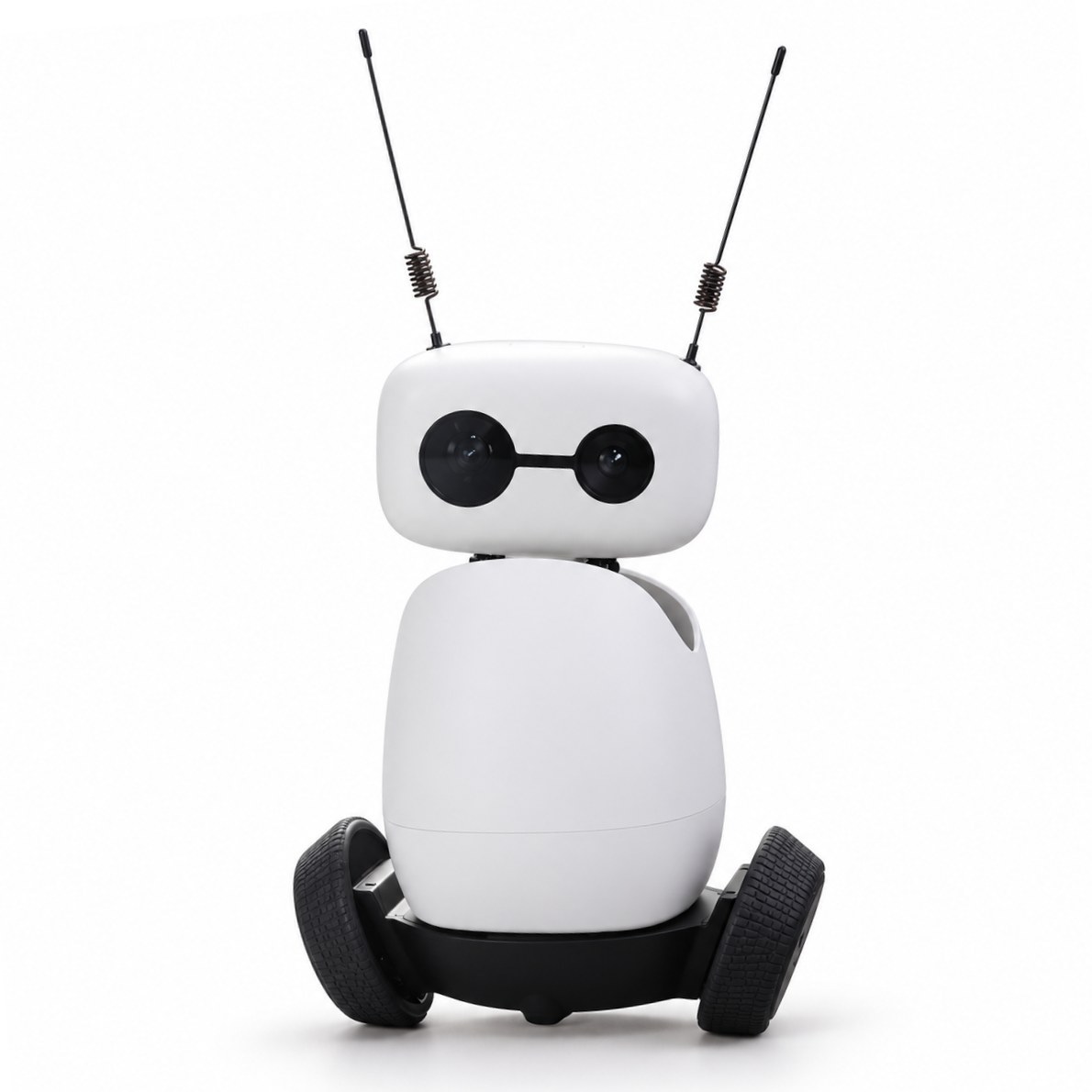
Reachy Mini, Hugging Face's round-headed open-source desktop robot, can finally get off the desk.
On October 29, Pollen Robotics, Hugging Face's robotics team, launched the Reachy Mini "Level Up" accessories: a two-wheeled base that lets it roam, a phone app that removes the need for a computer, and a set of NFC hats that change its personality. Hugging Face co-founder Thomas Wolf promoted the launch himself, complete with a video of Reachy Mini racing another small robot, Microduck. Reachy Mini won.
$149 to go from desk to house
The base, called Hoverboard, costs $149 and works only with Reachy Mini Wireless, the version with a built-in computer and battery. It arrives fully assembled: set the robot on top, lock it in and drive. In the app, dual joysticks control the wheels and the robot's head while a live feed from its camera shows the view, effectively turning Reachy Mini into a mobile camera that can look around.
The base has its own battery, motors and electronics, connects over Bluetooth, Wi-Fi and USB-C, and has a clever anti-tip design: when it stops or powers off, it sits down.
This is more than a toy upgrade. Desktop robots have an obvious ceiling, since they only ever see one patch of desk. Once Reachy Mini can move, it can patrol a room, follow someone, or check on another corner, which gives embodied-AI experiments far more room.
Hats as personalities, and as physical shortcuts
The hats may be the more interesting idea. The $35 NFC Accessory Pack includes a chef's hat, a jeweled crown and a feathered pirate hat. Each attaches with magnets, and its NFC tag is read by a module installed in the robot's head, switching the character in the conversation app. Put on the chef's hat and it might become a kitchen helper.
The pack also includes four blank NFC tags and eight magnets so owners can make their own accessories and tie them to new personalities or their own code. It is smart interaction design: switching apps, a digital action, becomes swapping hats, a physical one any child understands. For an open-source robot aimed at education, makers and AI tinkerers, that beats any menu.
The accessory economy of open hardware
Both accessories are expected to ship at the end of January 2027. Reachy Mini itself costs $399 for the Lite and $499 for the Wireless, and ships as a DIY kit that takes about two and a half hours to assemble.
Hugging Face clearly wants Reachy Mini to be the Raspberry Pi of embodied AI: a cheap, open base with an ecosystem that grows through community and accessories. With humanoid robots still costing tens of thousands of dollars, a small robot racing around the house in a pirate hat may be where many more people first meet physical AI.