
Rokid and Google Bring Offline Multimodal AI to Smart Glasses
Hi Rokid 1.16.0 upgrades Vision AI with Google, letting Rokid Glasses understand and describe scenes offline with an on-device multimodal model.
AI glasses tend to fail where signal is worst: on the subway, on a mountain trail, or in an airport right after landing abroad. On October 30, Rokid shipped Hi Rokid 1.16.0 and took that problem head on. Its upgraded Vision AI now works without an internet connection.
The upgrade was built in collaboration with Google. Rokid says this makes it the world's only smart-glasses company offering users on-device multimodal large-model capabilities. Offline, Rokid Glasses can still understand what is in front of you in real time and describe the scene. Rokid has not named the model, but given the partner and the on-device multimodal framing, Google's Gemma family is the obvious guess.
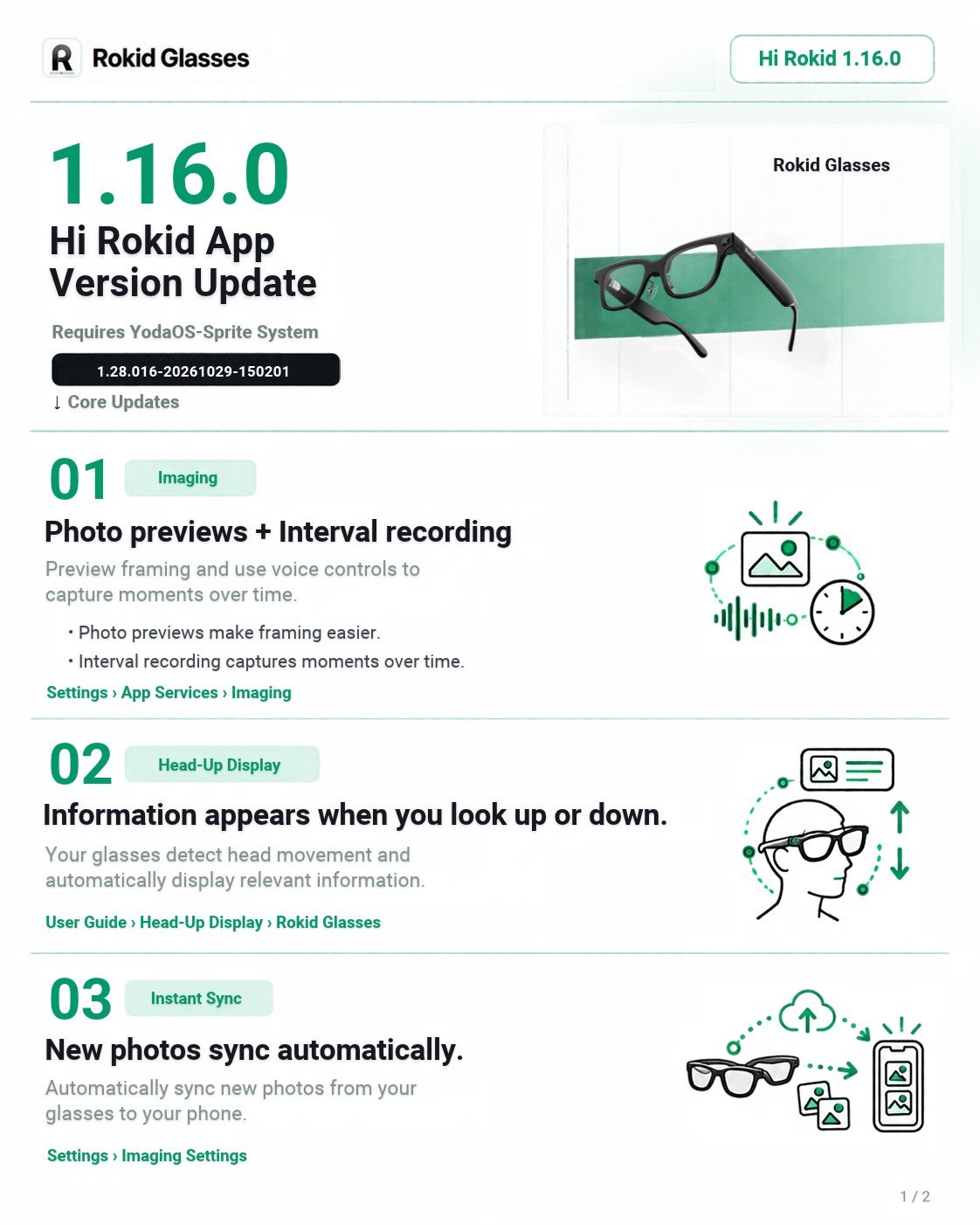
Beyond offline vision, 1.16.0 adds photo previews, voice-controlled interval recording, a head-up display on Rokid Glasses and automatic photo syncing through Instant Sync. On the cloud side, Rokid added service nodes in the US and Germany and upgraded translation. Both point to a serious push overseas, and translation is the feature AI-glasses owners lean on most when traveling.
Moving AI onto the device is about more than working offline. Visual data that never leaves the glasses eases privacy concerns, and skipping a round trip to the cloud makes responses faster. For a device worn all day that is always looking, those two matter more than benchmark scores. The constraints are just as real: glasses have very little compute, thermal headroom or battery. How much an on-device model can understand, and how long it can run before the frame heats up and the battery drains, will decide whether this becomes an everyday tool or a one-time wow.
Meta and Ray-Ban still lead AI glasses in the West, and China is crowded with rivals. By leaning on Google's models for an offline, multimodal edge, Rokid fills its own gap in foundation models and lines up early as the Android XR ecosystem takes shape. For owners, it takes only an app and firmware update to try, which makes this a generous release.