
OpenWorld Pitches an Open-Source, AI-Native RPG at Massive Scale
OpenWorld bills itself as the first AI-native RPG at scale: 1,024 maps, 1,654 characters and 40,562 items, all AI-powered, with the project open-sourced.
"AI-native games" have been promised for two years, yet most still amount to one chatty NPC on a small map. On October 30, researcher Sihan Xu unveiled OpenWorld and put the ambition in numbers: the first AI-native RPG at scale.
The scale is striking: 1,024 maps, 1,654 characters across 780 households, and 40,562 items in 1,013 categories, all powered by AI. The trailer shows pixel-art ruins and villages, anime-style character portraits and captions like "new places, new people." It feels closer to a content-heavy Japanese RPG than a tech demo.
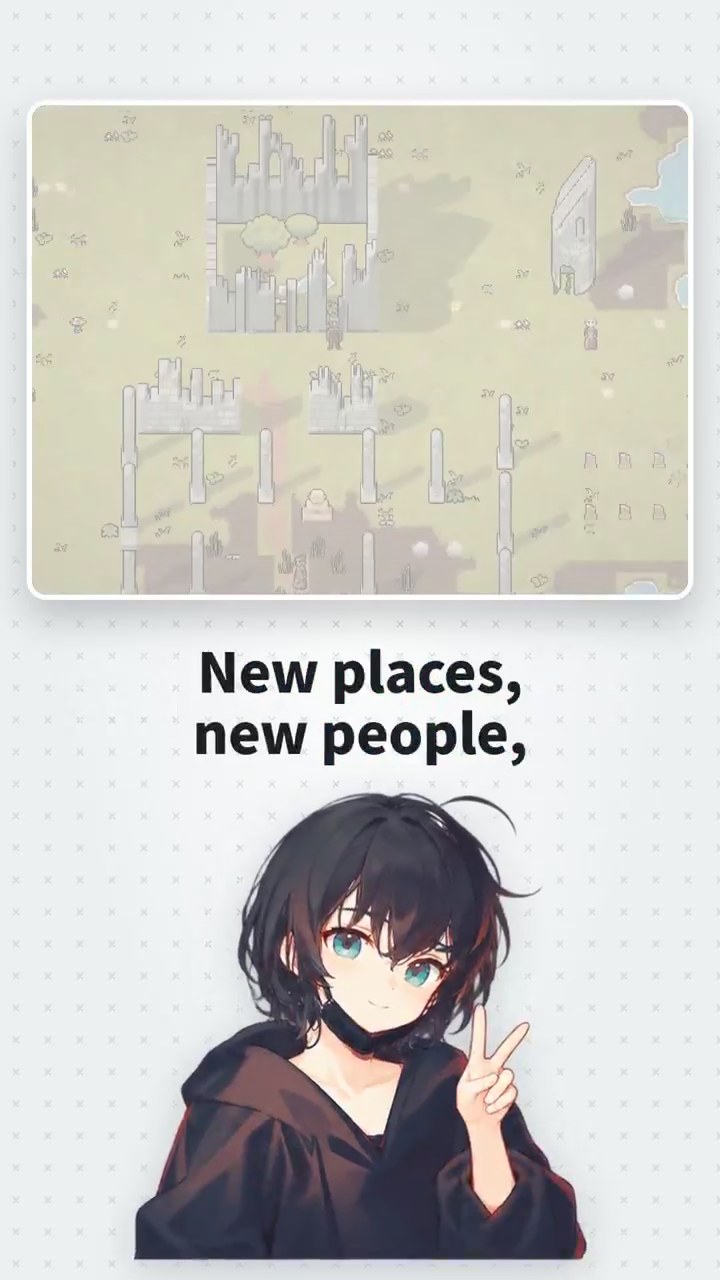
The headline is that the team is open-sourcing the whole project and inviting the community to build on it. That matters. The hard problem in AI-native games was never generating a character; it is keeping a thousand of them consistent, believable and stable in one shared world. Releasing the maps, characters, items and the systems behind them hands developers and researchers a ready-made large-scale AI society sandbox, a strong starting point for games, NPC-agent research or world-model evaluation alike.
The 780 households detail is telling. It suggests characters are not generated in isolation but organized into family and social networks, the direction "Smallville"-style agent experiments have pursued, now scaled to more than a thousand people and wrapped in a full RPG.
Big numbers are not the same as fun. AI-generated content often ends up vast but bland, and 40,000 items without gameplay meaning are just database rows. The inference cost of running a thousand AI characters at once will also decide whether games like this reach ordinary players. Details on the repository, model choices and how to run it are still to come. But if OpenWorld gives the community a world big enough to iterate on, it could push AI games further than yet another closed demo.