
Japan's robot orders jumped 46.6%, with China taking the largest share
JARA data shows Japan's industrial robot orders hit ¥325.4 billion in Q3, up 46.6% and a fourth straight record quarter, while production rose 26.2% and shipments 22.1%.
Exports to China rose 29.2%; Europe fell for the first time in five quarters.
Japan's robot industry association, JARA, reports that orders for industrial robots in July to September 2026 reached ¥325.4 billion, up 46.6% year on year — the ninth consecutive quarter of growth and the fourth consecutive record quarter. The data covers JARA members including Fanuc, KUKA, ABB and Yaskawa, and excludes service robots.
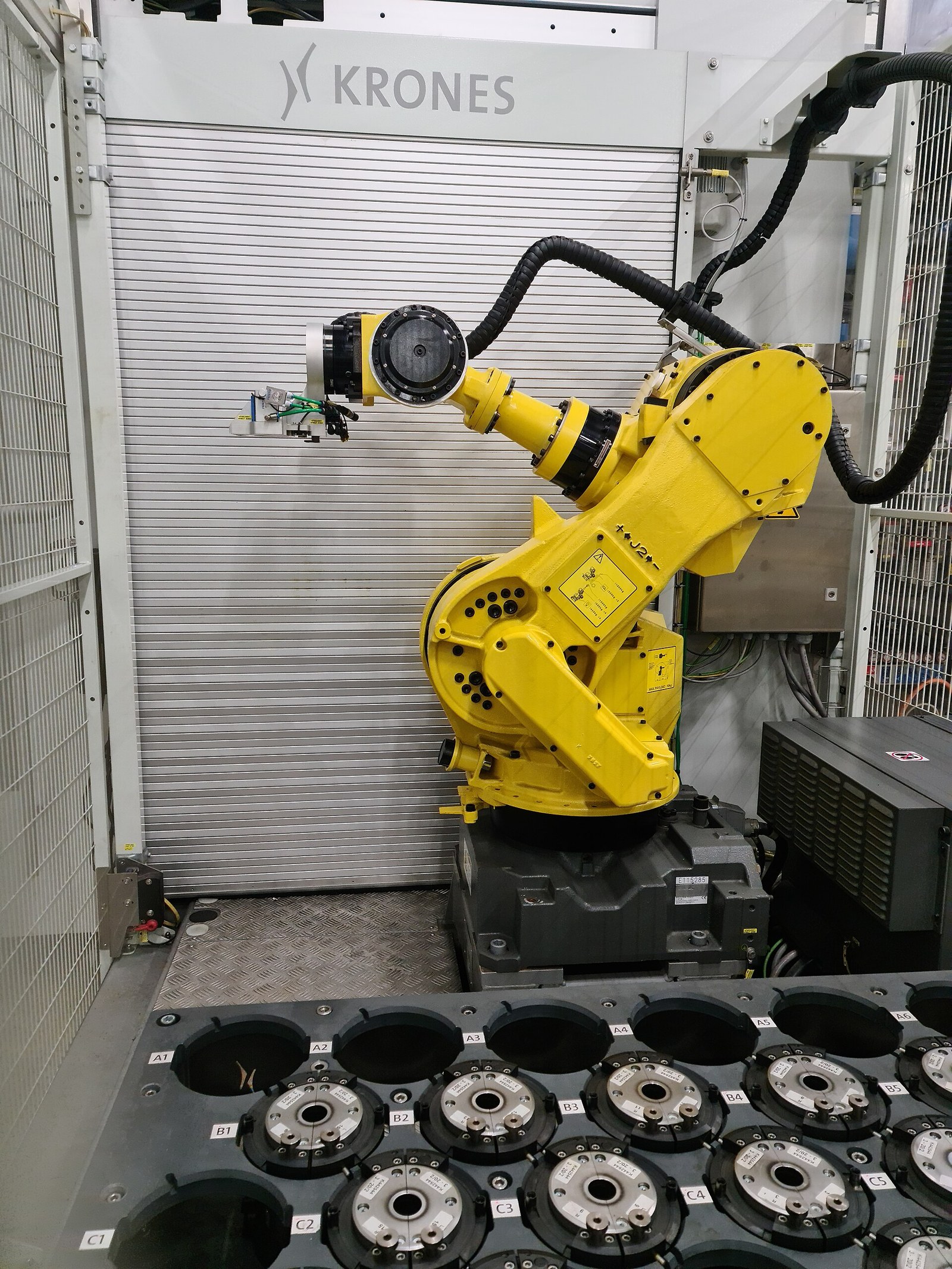
One note on methodology: JARA counts only its member companies, so the true size of Japan's industrial robot sector is larger — but as a trend indicator the series is good enough. It measures capital spending, not how clever the robots are.
Three numbers, three growth rates
Production in the same quarter was ¥261.5 billion, up 26.2% and the eighth straight quarterly increase; total shipments were ¥264.7 billion, up 22.1% and the seventh consecutive gain. All three set records, the fourth quarter in a row to do so.
Line up the three rates: orders +46.6%, production +26.2%, shipments +22.1%. Orders are running roughly twice as fast as output, which means lead times are stretching and backlogs are building. That is good news for equipment makers and a waiting game for customers.
Export map: Asia takes the bulk, Europe slips
Exports were ¥216.5 billion, up 23.5%; domestic shipments were ¥48.2 billion, up 16.3%. By region, Asia accounted for ¥158.1 billion, up 34.3% and the ninth consecutive quarterly gain, including ¥88.1 billion to China, up 29.2% and the eighth straight increase; the rest of Asia reached ¥69.9 billion, up 41.2%.
China's ¥88.1 billion is 56% of Japan's exports to Asia. That number cuts both ways: China is the largest buyer of Japanese robots and also the strongest competitor at the lower end, where domestic makers have been aggressive on price.
North America was ¥35.7 billion, up 5.6% and the seventh consecutive gain; Europe was ¥20.1 billion, down 1.5%, the first contraction in five quarters. Europe's weakness tracks its car industry: automakers are cutting capital spending and suppliers are cutting jobs, so equipment orders feel it first.
What "AI-related investment" means
The report attributes the surge to automation demand plus AI-related investment. In practice the most direct pull comes from semiconductor and data-centre construction — new lines need more robots for handling, assembly and inspection. The second layer is Japan's own ageing workforce, which turns automation from optional to necessary.
Policy is pushing too. Japan's Ministry of Economy, Trade and Industry has set a goal of deploying 10 million AI robots across 18 fields, from manufacturing to healthcare, by 2040. The number sounds extreme, but it explains why Japanese equipment makers are willing to add domestic capacity.
The full-year forecast was raised
In June, JARA raised its 2026 order forecast from ¥1.03 trillion to ¥1.22 trillion, a lift of ¥190 billion, implying 16.7% growth, the first time above ¥1 trillion in four years and a record above 2022's ¥1.1118 trillion. Production is forecast at ¥1.05 trillion, up 11.1%.
One variable is easy to overlook: a weaker yen. Japanese equipment is cheaper abroad once converted, so part of the export growth is currency, not demand.
With three quarters of actuals in hand, most of that forecast is already covered. Unless the fourth quarter stalls, passing ¥1 trillion for the year looks settled.
One caveat: orders are a leading indicator of capital spending, not demand itself. Robots have to be installed, commissioned and given work; a 46.6% jump in orders does not mean downstream utilisation rose in step. The real question for Japanese suppliers is capacity — production is growing 20 points slower than orders, and that gap has to be closed either with new lines or with longer lead times and higher prices.
This piece summarizes public reporting and did not independently verify vendor demos or experimental data. Not investment advice.