Ninety robot teams climbed Mount Tai; some fell down the stairs
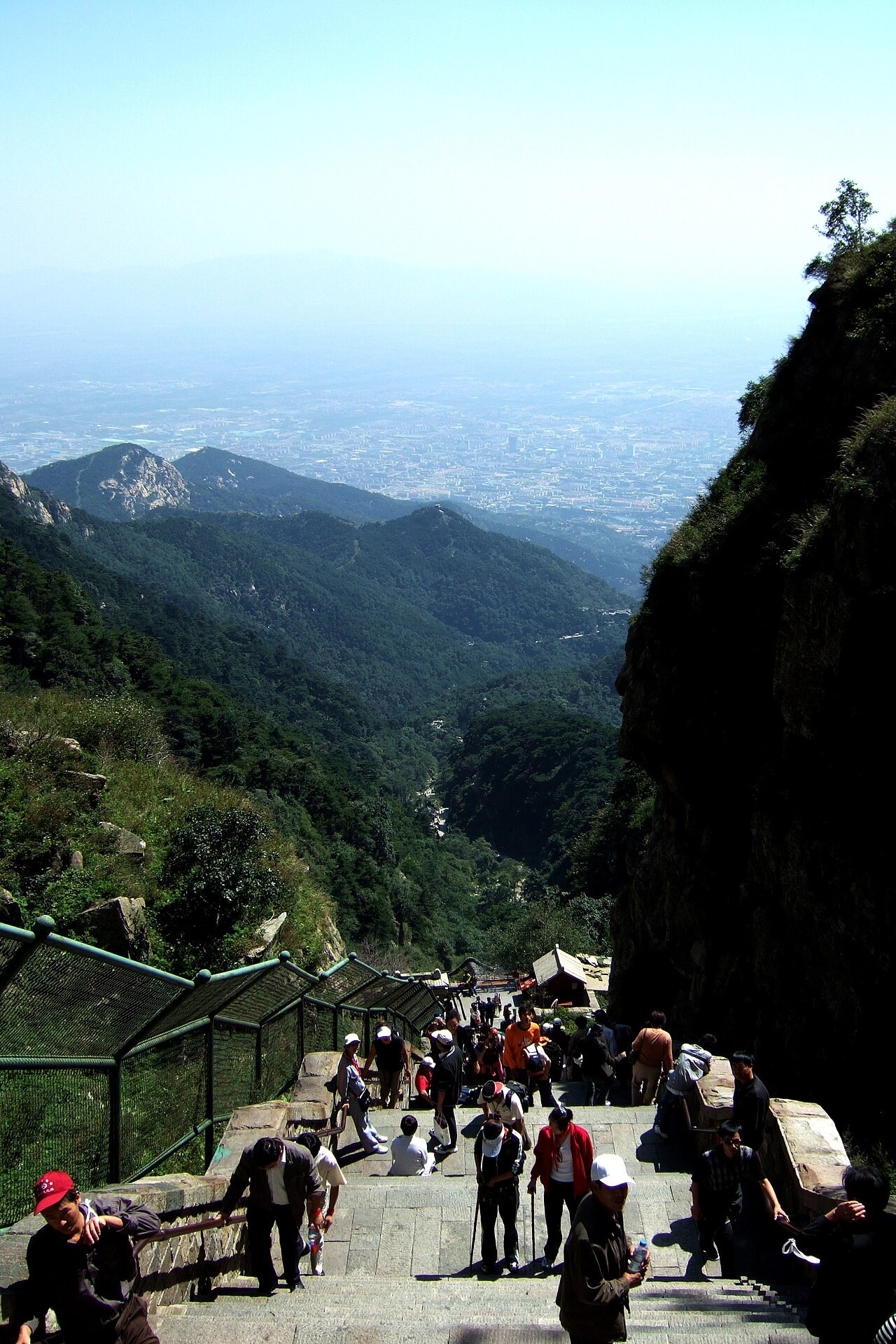
At the World Mountain Robot Challenge on Mount Tai, 90 teams took on 3,000-plus steps, 3.9 km and 600 m of ascent, racing for speed or carrying fragile goods.
A Lingyi quadruped won its category in 43:41 while humanoids tumbled.
Monday, Mount Tai. More than 3,000 steps, 3.9 kilometres, 600 metres of ascent, and 90 teams carrying their machines up the mountain. AFP's account has a few very concrete frames: a humanoid wearing a bandana collapsed on the stone path while engineers crowded round to repair it; another caught a step and clattered down an entire flight of stairs, coming to rest beside a rubbish bin.
Two events: go fast, or don't break the eggs
The World Mountain Robot Challenge was organised by China Media Group and set two kinds of task: reach the summit fastest, or deliver fragile goods intact — the official examples were fresh eggs and watermelons. Prizes were handed out by category, including fastest robot and best load-carrying quadruped.
One detail in the rules is easy to miss: the delivery event used eggs and watermelons rather than bottled water. At the same weight, fragile goods demand far tighter control of acceleration and posture — spilled water can be wiped up, a broken egg is a failure.
Writing eggs and watermelons into the rules turns "don't drop it" into a measurable target. A robot on a stage can perform one perfect motion; on a mountain path it cannot, because every step may be loose gravel, a stair edge, or a tourist bumping into it.
The winner was a quadruped
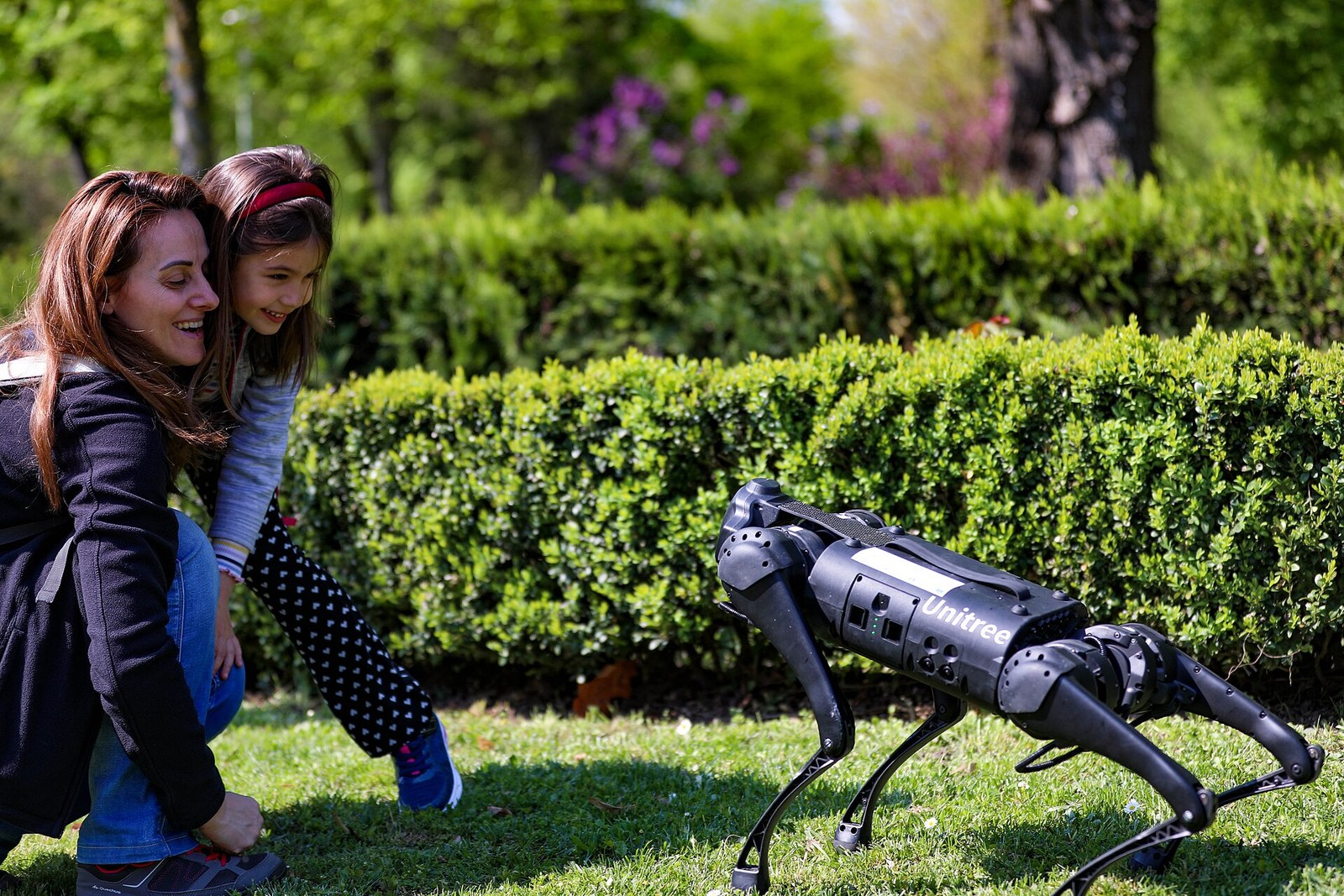
The four-legged speed category went to a robot dog from Beijing Lingyi Technology, in 43 minutes 41 seconds. Lingyi is a Unitree subsidiary, and the lineage shows: quadrupeds have spent years in inspection and firefighting work, where climbing and obstacle crossing are routine.
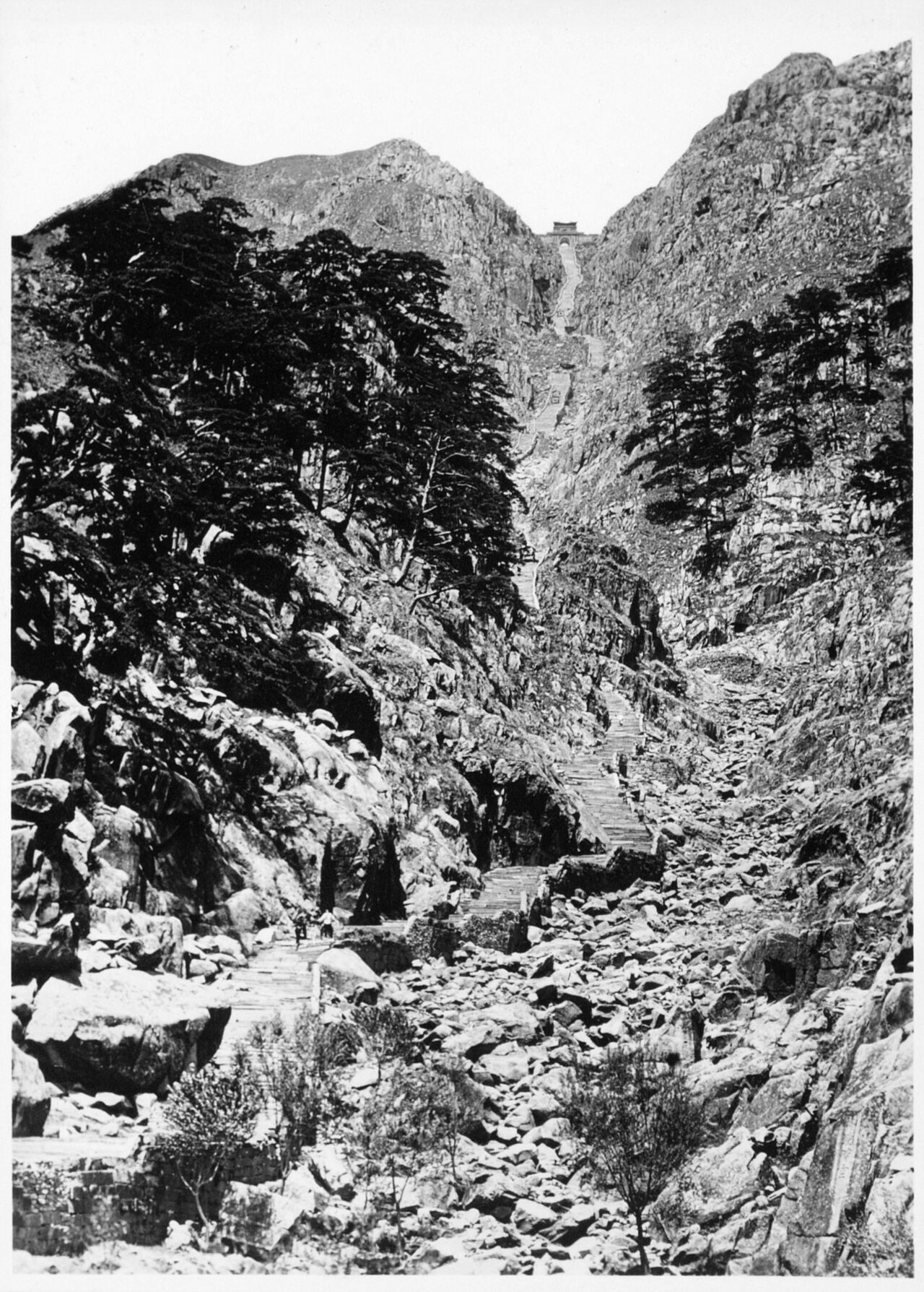
Mount Tai has another particularity: the path is a working scenic trail with visitors on it every day. Robots had to thread through people, which is closer to a real deployment than a closed course.
The humanoids did not post comparable results. The reason is not mysterious: stability on continuous stairs depends on centre-of-mass control and foot placement at every step, and one misjudgement costs a whole flight. A quadruped has four points of contact, so its margin for error is simply larger.
The falls were the most valuable part
The reporting did not hide the failures. Humanoids coming apart and tumbling down stairs is exactly what the organisers wanted: they called Mount Tai a "natural extreme testing ground" that could help robots learn real-world capability.
That line can be read two ways. As promotion: hold a race, lift the industry's spirits. As an engineering judgment: no simulation fully reproduces the complexity of real terrain, and every long outdoor run adds data about where things break.
The fact that engineers repaired machines on site says something in itself. The robots were not kept in a lab until perfect; they were pushed up the mountain, fixed when they broke, and sent on. That rhythm resembles factory maintenance more than a product launch.
What such a race actually measures
Over a longer horizon, races like this have mattered before. In the DARPA Grand Challenges of 2004 and 2005, almost every vehicle failed, and those failures seeded the autonomous driving work that followed. The value of a race is not the prize; it is concentrating failure into one place and one stretch of time.
Robustness, not cleverness. A mountain path tests neither language understanding nor multi-turn dialogue. It tests whether joints overheat under repeated impact, whether batteries sag in the cold, and whether a controller goes unstable on a loose stone.
Those are the numbers buyers care about. Before a factory purchases a robot, the question is rarely "can it plan on its own" but "how many hours can it run a day, and how fast can it be fixed." A course like Mount Tai puts the second kind of question on the table.
Most of the 90 teams will not win an order because of one race. But the machines that fell will go back to the lab with a pile of fault records, and those records are worth more than the trophies.
This piece summarizes public reporting and did not independently verify vendor demos or experimental data. Not investment advice.