
The US called robot imports a security risk, then skipped the tariffs
An October 28 Section 232 proclamation found robotics and industrial machinery imports threaten US national security but imposed no tariffs, sending Commerce and the USTR to negotiate with a report due in 180 days.
On October 28, a US proclamation under Section 232 found that imports of robotics and industrial machinery threaten national security. It did not impose tariffs. Instead it directed the Commerce Department and the US Trade Representative to negotiate and report back within 180 days. The decision the robotics industry had waited two months for landed on "talk first."
Section 232 is a gun that need not be fired
Section 232 of the Trade Expansion Act of 1962 lets the president impose tariffs or quotas on imports on national security grounds. Its best-known use was the 2018 tariffs on steel and aluminium; since then the tool has been applied repeatedly to semiconductors, rare earths and other categories.
Such investigations are typically run by Commerce on a statutory clock of roughly 270 days, after which the president has 90 days to decide on a measure. The appeal of the tool is speed: no legislation, no lengthy hearings — one proclamation can change the cost structure of an entire supply chain.
The procedure runs investigation, finding, measure: Commerce examines whether imports of a product threaten national security, and the president decides what to do. The measure need not be a tariff — it can be a quota, a licensing regime, or, as here, a turn to bilateral talks.
So the proclamation says, in effect: the threat stands, but no action for now.
Why talk instead of tax
The reporting does not give a reason. What can be said is that the statute already allows negotiated alternatives, and the 180-day deadline points the same way: this is not an abandonment but a deferral.

What a manufacturer can adjust is origin and customs routing. What it cannot easily adjust is the parts inside a robot that have no substitutes — reducers, servo motors, controllers. Changing a supplier means re-qualification, measured in quarters.
For companies in the supply chain, "later" is not relief. The tariff risk has not disappeared; it has changed from "will they" to "will they, in 180 days." Pricing, capacity planning and customs routing all have to be decided with that unknown in the room.
Then there is scope. The proclamation refers to "robotics and industrial machinery," and the reporting does not list product categories. Whether industrial robots, collaborative robots, humanoids, reducers and servo motors all fall inside is unclear. The vaguer the scope, the more companies plan for the worst case.
Two rulebooks being written at once
Set this next to the other news from the start of the month and the contrast is plain. In China, the first six national standards for humanoid robots were published in late October and take effect in April 2027 — they govern how products are evaluated and tested. In the US, Section 232 governs whether those products may enter and on what terms.
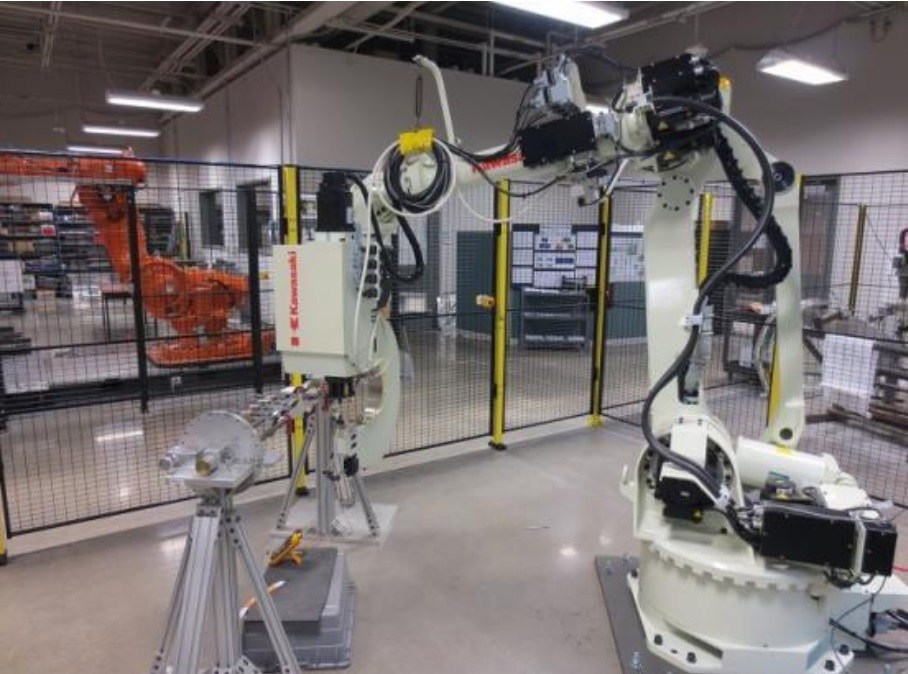
China is the world's largest market for industrial robots, and its domestic makers have been exporting more in recent years, which makes the intersection of the two rulebooks concrete.
One is a technical standard, the other a trade rule. They belong to different agencies but land on the same companies. For Chinese robot makers, the variable in going abroad has shifted from "is the product good enough" to "is it good enough, and will it be taxed."
Cross-border shipments of humanoids are still small, so the near-term effect on earnings is limited; the companies actually exposed are those already exporting industrial robots, servo systems and reducers. There will be no conclusion for six months, but every round of talks will be repriced. After 180 days, if the talks fail, the language in the proclamation can turn into measures; if they succeed, the file will end up where many Section 232 cases do — on paper.
This piece summarizes public reporting and did not independently verify vendor demos or experimental data. Not investment advice.