
Robot orders are starting to show up in magnet makers' earnings
JL Mag's robot and servo motor revenue reached RMB 428 million in the first nine months, up 101.77% and about 5.7% of the total, while Zhenghai began mass production for a humanoid customer.
Industrial robots still drive most of the demand.
On November 2, Cailianshe went through the quarterly reports of China's rare-earth magnet makers looking for one answer: whether robot orders have actually turned into revenue. JL Mag's robot and industrial servo motor business brought in RMB 428 million in the first nine months, up 101.77% year on year, or about 5.7% of total revenue.

5.7% is a very small number
On share alone, the business is not yet a pillar. Two details are worth noting: the growth rate, which is 2.3 times the pace of the company's magnet sales for electric vehicles; and the definition, which lumps "robots" together with "industrial servo motors" — a sign that industrial demand, not humanoids, is still doing the work.
Zhenghai Magnetic Materials put it more plainly: it has moved from technical support to volume delivery, reaching mass production for a well-known global humanoid customer and beginning to contribute revenue. The same report notes that the business is still early and its contribution to overall results is limited. Ningbo Yunsheng and Zhongke Magnetic Materials also mentioned progress, without disclosing figures.
The market watches this small line item because valuations of robot makers have run ahead, and the upstream needs a verifiable landing point. While the machine builders are still talking about orders and demos, a magnet maker's revenue line can at least be checked every quarter.
From selling material to selling modules
JL Mag is moving up the chain. It used to sell magnetic material; now it sells motor rotor modules, a component closer to the customer's assembly line. Management said at an October 28 briefing that rotor modules are machined to micron precision, that the company has won a project designation from a well-known global technology company, and that shipments are now ramping against orders.

The capacity plan came with it: a plant designed for about one million units a year, most equipment already installed, and at least a year needed to reach roughly 20,000 units a week. The company also plans to deliver a third-generation embodied robot product to external customers around the end of 2027.
Moving from material to module changes more than the unit price. Material competition is about cost and purity; module competition is about machining precision, consistency, reliability and delivery — exactly what robot customers scrutinise most.
Industrial robots are doing the pulling
This part tends to get lost in headlines. According to JL Mag's remarks during an institutional research visit, quadruped robots are gradually being deployed for firefighting and inspection, and demand for the robotic arms used to collect training data keeps growing. Analysts put it more directly: what is visibly driving magnet demand today is industrial robotics — vision inspection equipment in smart factories, AGVs in ports and warehouses.
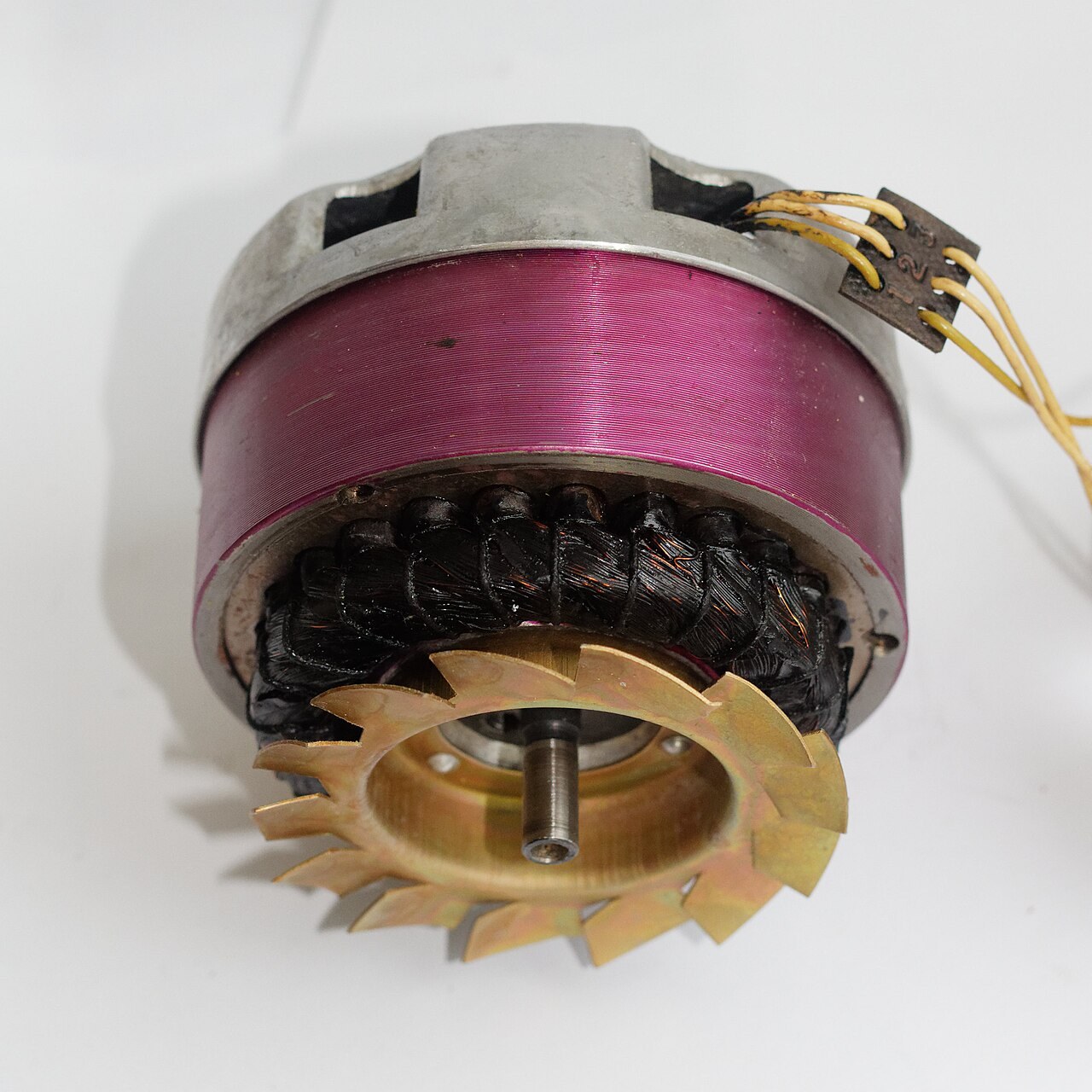
To be plain: most of the "robot revenue" in these reports comes from industrial automation that has been running for years; humanoids are only just beginning to contribute orders. Reading it as proof that humanoids are already in mass production would be a mistake.
The chain transmits with a lag
From orders to profit, and from profit to upstream material purchasing, each link moves at its own pace. Magnet makers see module orders first, motor factories see shipments first, and miners feel demand only once downstream schedules stabilise. The analysts quoted by Cailianshe also caution that whether robotics becomes a genuine growth curve will ultimately be answered by scale delivery and sustained profit.
Which is also why the upstream is a better gauge of this sector than a launch event: a filing cannot be edited.
The signal from this earnings season is limited but clear: robot orders are starting to appear in the revenue lines of upstream companies, and they are still small. Look at the same line a year from now — if the share moves from 5.7% into double digits, that is when the curve has actually lifted.
This piece summarizes public reporting and did not independently verify vendor demos or experimental data. Not investment advice.