
Google's Suncatcher Satellite Runs First AI Inference in Orbit
Google's Project Suncatcher prototype booted a data-center-class TPU in orbit and had Gemma 4 write a space haiku; twin linked satellites are planned for 2027.
The first words from a would-be space data center were a haiku. Google says its Project Suncatcher prototype satellite hit a "Hello World" milestone: the first AI response from a data-center-class TPU in orbit.
The satellite, built with Planet, launched on October 1 aboard SpaceX's Transporter-18 rideshare. Over the following weeks the team worked through commissioning—powering up the host and TPU trays and running early machine-learning tests. This week, during a ground-station pass, engineers uplinked a prompt asking the onboard Gemma 4 open model for a haiku about being in space. Over Svalbard, Norway, the answer came down: "Blue marble below / Data streams in silent grace / Starlight feeds my core." The team followed with space-themed limericks and telemetry prompts asking the payload to report its own status.
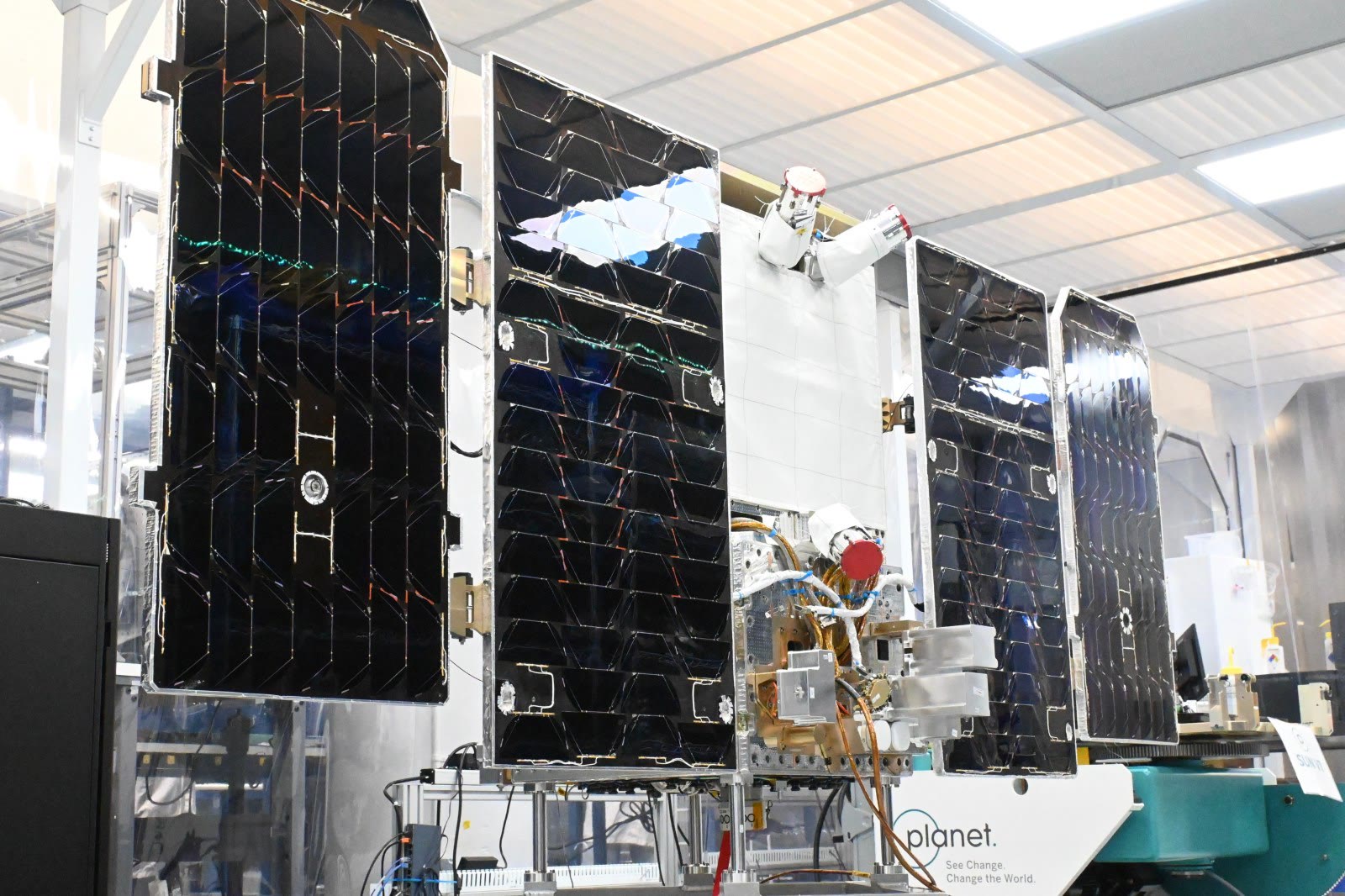
The satellite reportedly carries four TPUs and generates up to about 1 kW, but power and heat limits mean only one chip runs at a time, for roughly 20 minutes. So this is not a space data center. It proves something narrower and still essential: a commercial AI chip survived launch, powered up and completed a full command-to-response loop through a ground station. Many orbital-compute pitches have never shown that in hardware.
The hard part is next. Google will test how TPUs cope with thermal stress and radiation. In vacuum there is no air to carry heat away, and cosmic rays can flip bits and silently corrupt results. Ground accelerator tests suggested inference is fairly robust and training more fragile; now orbit gets the final say. Passing those tests unlocks the next milestone: twin interconnected satellites in 2027.
The logic of moving compute to space is simple—sunlight is abundant, while grid power and land are becoming hard limits on AI growth. Cooling, bandwidth and unit economics are far harder than poetry. The haiku's real value is that Google has moved those questions from slide decks into actual orbit.