
A robot photographer is working the CIIE press centre
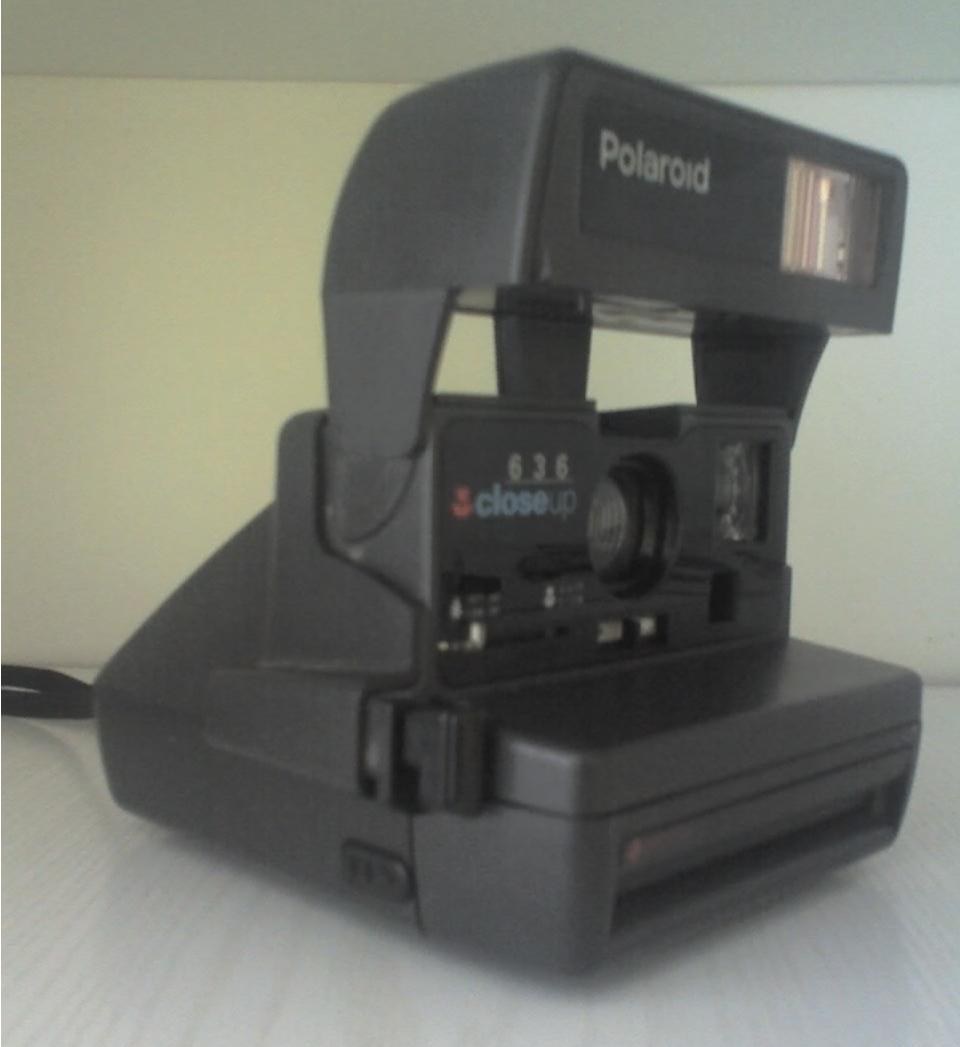
At the CIIE press centre on November 4, a Sharpa robot took Polaroids for journalists — picking up the camera, adjusting its grip, aiming, firing the shutter and handing over the photo within two millimetres.
On the evening of November 4, in the lobby of the CIIE press centre, a robot from Sharpa started taking pictures for journalists. The hard part is not the shutter press but the whole sequence: pick up a Polaroid from the table, adjust the grip, aim at the subject, press the shutter, and hand the photo over.
The difficulty is using a human tool
According to staff on site, a complete task requires holding the error within two millimetres and adjusting motion dynamically based on the camera's position and the forces on it. The robot relies on tactile feedback and fine force control to move between contact states.
Two millimetres is roughly the thickness of a coin. Cameras are designed for human hands: a small grip area, an off-centre mass, a reaction force when the shutter fires, and a body that shifts slightly under load. People do this by feel; a robot has to reconstruct that feel from sensors and algorithms.
Reaching two millimetres usually means visual localisation plus tactile fine-tuning: vision provides an approximate pose, touch corrects it at contact. Rigid objects are relatively easy; soft ones — cloth, food, a cup full of water — are far harder because their shape changes under load.
Dexterous hands are the acknowledged bottleneck of this generation. Several Chinese companies build five-fingered hands, and the hard parts are tactile sensing, force-control precision and durability. Working for days at a trade show is itself a durability test.
More important is using an existing tool at all. Industrial robots are easy to deploy because fixtures can be designed around the machine; the things people use — cameras, cups, door handles, screwdrivers — are shaped for human hands and human strength. A robot that can use them directly does not require the environment to be rebuilt, which is the precondition for entering service settings.
Why the press centre
The venue is well chosen. The press centre is crowded, the demand is clear (every journalist wants a photo), the word of mouth is strong (people who get a photo post it), and the environment is real: light changes, people move, objects on the table get shifted.
For a vendor this is a better test than a booth. On a stand the robot performs a motion once; the press centre runs for days, and stalls, misalignment and poorly placed cameras will all happen.
Services like this are usually billed by the day or by the event. For the vendor it is lighter than selling equipment — no line retrofits, no integration project; for the organiser it is cheaper than hiring — no training, no rota, and it generates attention.
Distance from a performance
Over the past year there has been plenty of footage of humanoids dancing, boxing and flipping. Those demos prove motion control, and audiences find them impressive, but few people imagine the machine doing their work.
Handing over a Polaroid is different. It is not cool, but everyone who receives a photo immediately understands that the machine did something for them. That understanding is worth more than any specification.
For the vendor, the value of the press centre is not orders but a case study. A working photo that journalists shoot and describe themselves is worth more than ten edited videos on a stand.
What has not been disclosed
Four things are missing: how long one photo takes, the success rate, whether anyone supervises on site, and whether it still works with a different camera.
Those four decide whether this is a demonstration or a deliverable service. The last one matters most: if swapping to another camera model requires recalibration, the capability is far from general; if it can just pick it up and work, that is genuine tool use.
The direction is clear enough: robots are moving from performing customised motions to using existing tools and plugging into existing workflows. It is not a flashy shift, but it is the step robots must take to leave the showroom.
This piece summarizes public reporting and did not independently verify vendor demos or experimental data. Not investment advice.