
Physical AI brief: Agility raises $465M, AgiBot swaps specs for a timesheet, and 96 robots learn together
Agility Robotics expects about $465 million in its SPAC deal and begins trading as AGLT on November 5; AgiBot replaces spec sheets with a work-hours metric; Tsinghua, Infinigence AI and AgiBot validate collective experience learning on 96 real robots.
All three point at one question: does Physical AI add up?
This issue's three stories come from three different places: an American company settling its raise on the eve of going public, a Chinese company turning "can it hold a job" into a metric, and a paper that linked 96 real robots into a group that learns from itself. They describe the same shift — Physical AI is now being asked to add up.
1. Agility: $465M settled, and the first quarterly audit for humanoids
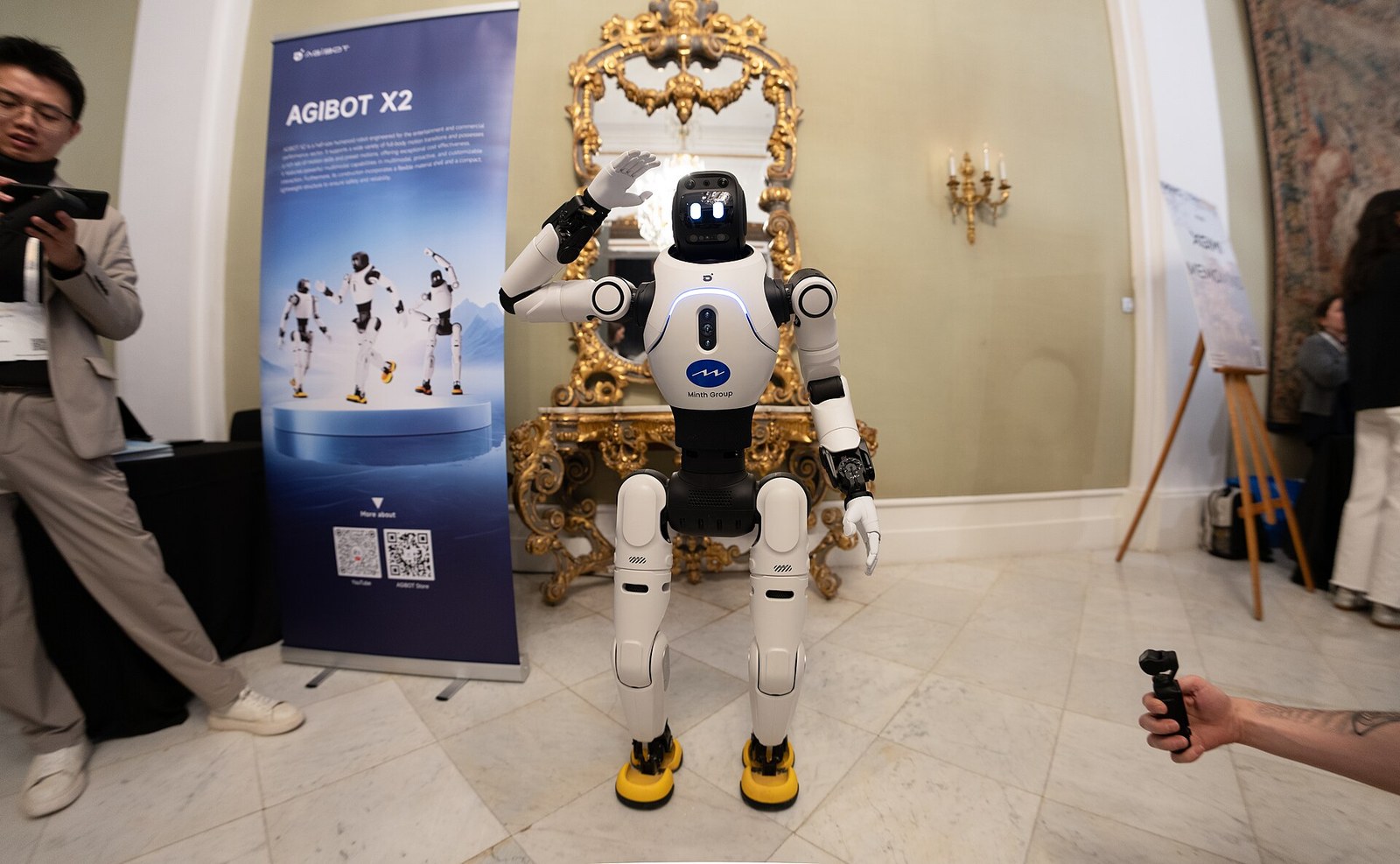
On October 30, Agility Robotics and Churchill Capital Corp XI said their business combination is expected to raise roughly $465 million gross, before transaction expenses. The total combines about $164 million from Churchill XI's trust account, a $201 million PIPE at $10 per share led by Foxconn, and $100 million of equity already received after the deal was announced. Closing is expected November 4, with trading on Nasdaq under "AGLT" from November 5.
The release makes a claim about position: Agility expects to be "the only U.S. publicly listed pure-play humanoid robotics company with proven, active commercial deployments." The numbers behind it: an October 26 announcement expanding its work with GXO to two more facilities; a manufacturing pilot with AGCO expected to begin in 2027; three more manufacturing customers in paid programs; and a pipeline of more than 30 prospective customers across manufacturing, automotive, aerospace, defense, logistics and consumer products. Digit 5, unveiled September 15, is set for early-access deliveries in the first half of 2027 and general availability by year-end, against more than $300 million in committed multi-year orders — which the release itself flags as "potential multi-year value," subject to contractual milestones, not current-period revenue.
Why it leads this issue: humanoids have so far been priced by private rounds. Once listed, orders have to become revenue and deployments have to repeat, quarter after quarter. It is the first time the category sits inside an auditable box.
2. AgiBot: measuring whether a robot can hold a job
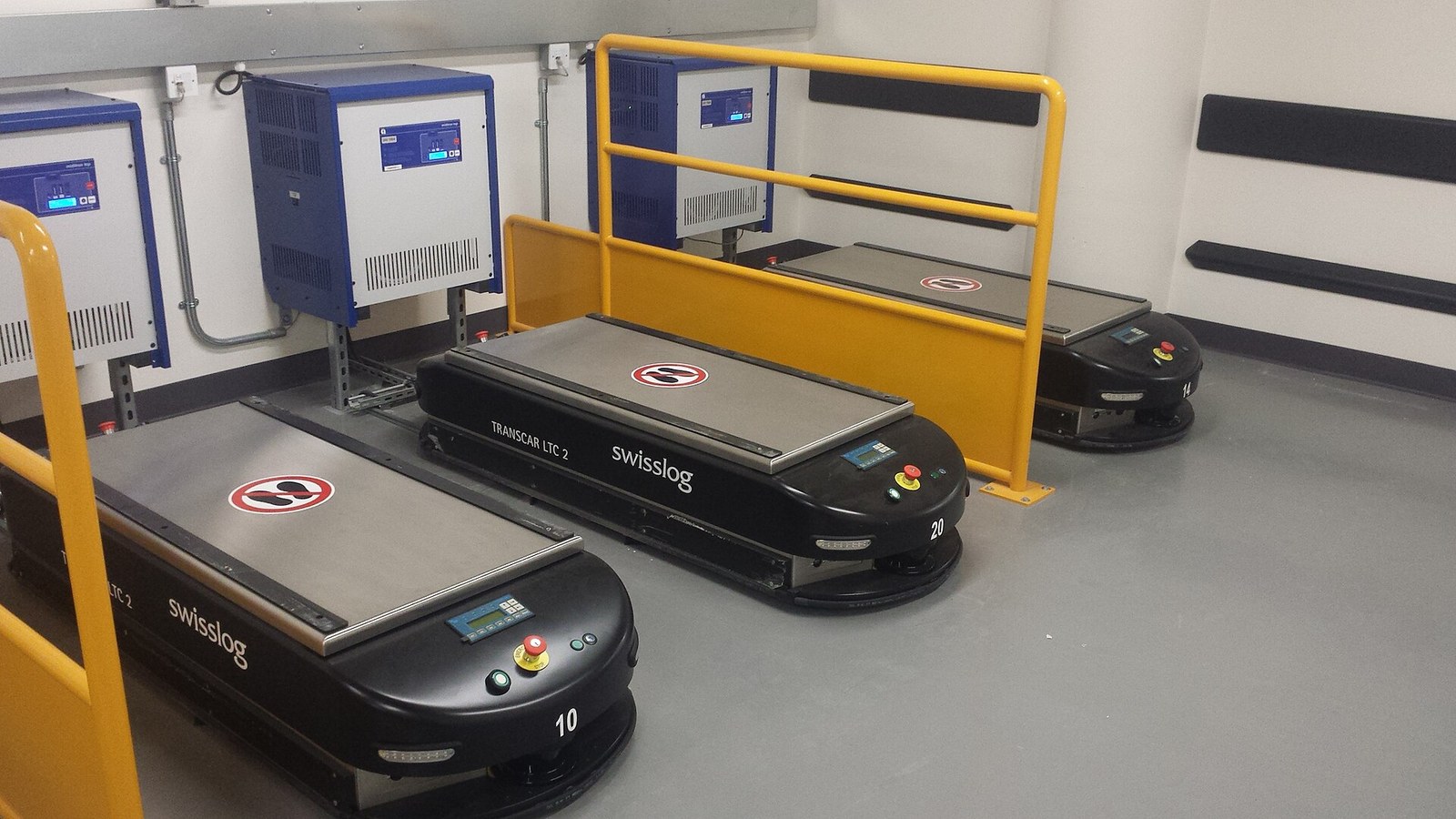
On October 29, AgiBot held its 2026 Innovation Day at the Shanghai World Expo Center before more than 1,000 attendees. Co-founder, president and CTO Peng Zhihui framed the year's main progress as a move from a "development state" to a "deployment state" — what he calls the "Y moment" for Physical AI.
To measure it, AgiBot introduced Worken, a unit built from "work" and "token," meant to quantify embodied intelligence. Peng's argument is blunt: a robot being powered on for hours does not mean it produced the same hours of value, and a good single-task success rate does not mean it can hold a post over time. The yardstick, in other words, moves from the spec sheet to the timesheet. Another line of his was widely quoted: "Rolling 10,000 units off the line is a manufacturing victory; getting 10,000 units onto the job is a Physical AI victory."
The releases came in layers. On hardware: a claimed industry-first subcutaneous joint liquid-cooling system, a new dexterous-hand family, the MEgo Glove for tactile data collection, and the safety-rated heavy-payload G2 Max. On software: the GO-3 Preview embodied foundation model (first on the RoboDojo, RoboTwin and RoboColiseum benchmarks, open-sourcing by year-end), the native multimodal interaction model WITA-OMNI, and Link-U OS 1.0, an embodied-native operating system open-sourced and donated to the OpenAtom Foundation. On deployment, the company says it runs a 7×24 inspection workstation at Longcheer's 3C factory.
Peng did not avoid the hard parts: insufficient real-time inference, model hallucination, missing physical common sense and closed-loop execution are the four bottlenecks he named. General models rooted in the digital world struggle to feel gravity or friction, and a single execution error in a factory means downtime — far less tolerance than a text conversation. He argues the constraint on scale is not production capacity but whether customers can reach positive ROI.
3. Ninety-six robots learning together
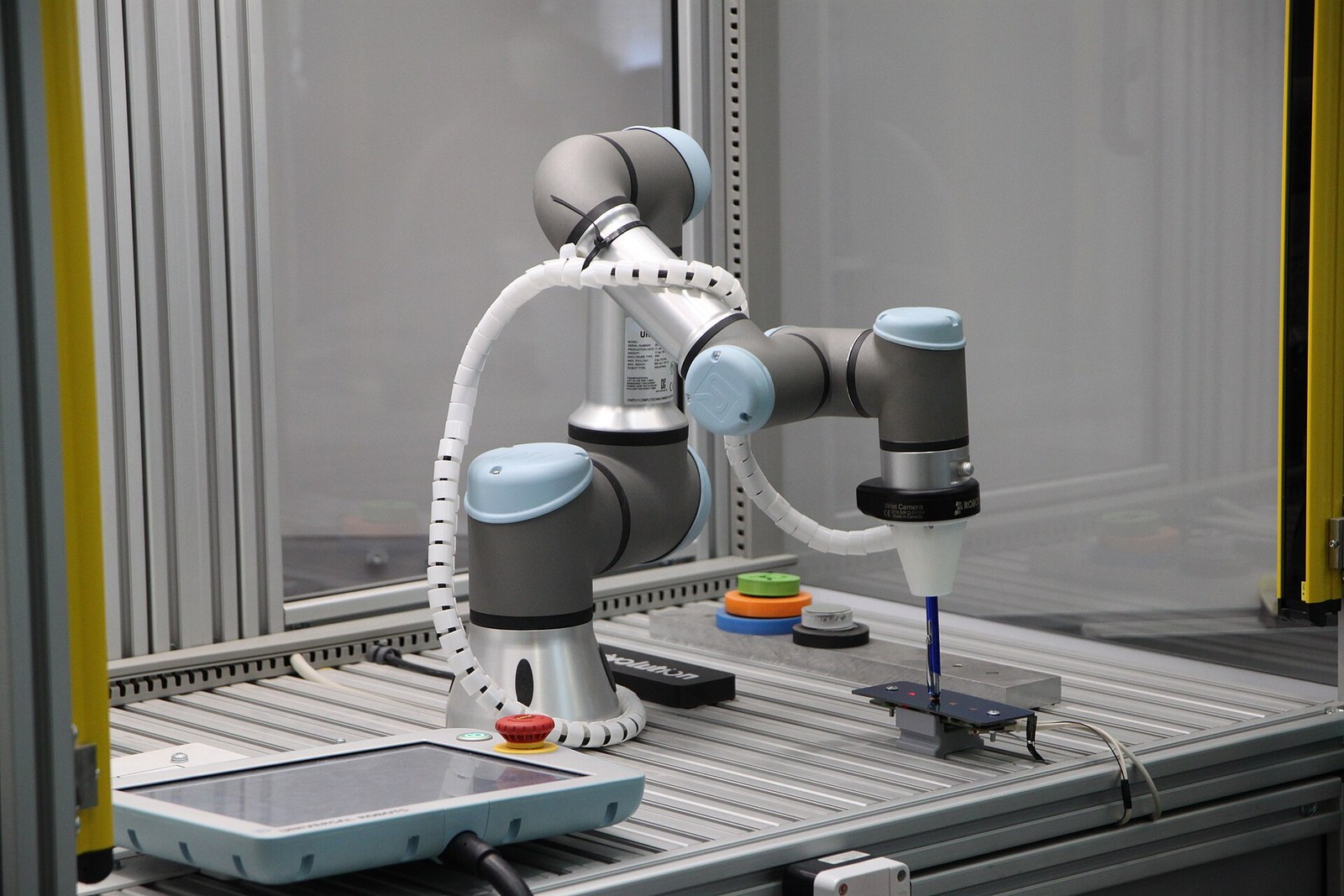
Also on October 30, Tsinghua University, Infinigence AI and AgiBot presented Collective Experience Learning (CEL) and validated it on a cluster of 96 real robots. The five tasks: flower arranging, clothes folding, phone charging, stool assembly and phone packaging.
Some numbers are worth keeping: two robots that never took part in training ran 600 trials and failed 15 times — 97.5% overall, with all five tasks beating the average of six human operators. On phone packaging, a multi-step industrial task, success rose from 79.2% to 98.3%, with two failures in 120 consecutive trials. Most importantly, it scales: going from 16 to 96 robots in training lifted success from 86.7% to 98.3%.
Two layers support it. On the systems side, a fault-tolerant asynchronous training system called FATS, built on the open-source RLinf reinforcement-learning framework, schedules robots and compute together so a robot uploads experience as soon as it finishes a task instead of waiting. In the 96-robot run the cluster collected 9,834 rounds of experience, and 30 failures across 22 robots cost only 1.3% of total machine hours. On the algorithm side, FERT does failure-guided experience retrieval: when a robot struggles, it finds similar situations among past successes and learns from them.
Why it matters: embodied AI has been stuck on "not enough people" — every gain in capability needed skilled operators to demonstrate again and again. Collective learning inverts the bottleneck: more robots means more experience and faster improvement. That is a replicable data flywheel, not a one-off leaderboard entry.
4. Three lines, one question
Capital is starting to price deployments. Agility's $465 million is not paying for demo videos; the release is entirely about customers, sites and order milestones.
The scorecard is changing. Replacing the spec sheet with a timesheet reframes "what can it do" as "how many hours of effective labor can it deliver in a year." If customers accept that framing, the business model shifts from selling hardware to selling service.
The flywheel is turning differently. It used to be people teaching machines; now it is machines teaching machines. The number 96 is not the striking part — the slope as it scales is.
Taken together, the competitive question has moved from "can it be built" to "does it add up": cost per hour of work, repeatability of deployment, and whether experience stays in the system rather than with a particular skilled operator.
This piece summarizes public reporting and did not independently verify vendor demos or experimental data. Not investment advice.