
Geek+ wants to hand the whole warehouse to robots
Geek+ published a 24/7 Autonomous Intelligent Warehouse plan on November 3, pairing its Gravity embodied framework and 4D world model with an RMS, WES and IOP stack to run entire warehouses around the clock.
On November 3, Hong Kong-listed warehouse robotics company Geek+ (02590) published a plan it calls "24/7 Autonomous Intelligent Warehouse." Founder and CEO Zheng Yong framed it this way: over 11 years the company has proven robots can be deployed commercially at scale in warehouses worldwide; the next stage is to make an entire warehouse run autonomously around the clock and keep improving in live operation.
What is actually in the plan
The technology comes in two layers. Underneath is an in-house framework called Gravity plus a Gravity 4D embodied world model, covering multimodal perception, long-horizon task reasoning, 4D physical world modelling and motion planning. On top sits the "warehouse brain": a robot management and scheduling system (RMS), a warehouse execution system (WES) and an intelligent operations platform (IOP).
Above both is a layer called warehouse intelligence, using AI agents to strengthen "collaborative intelligence" and "operational intelligence." In plain terms: one layer decides how robots move, one decides how the warehouse runs, and the top layer decides what to do when something goes wrong.
From selling equipment to selling uptime
For two decades the warehouse robotics business has been equipment plus implementation: install a system, get it accepted, collect payment, then maintain it. Making "7×24 autonomous operation" the strategy shifts the yardstick from equipment delivered to hours running.
That shift matters to customers. Equipment that sits idle outside peak hours is wasted capital; charging by running hours or by orders handled moves the risk. But it also means the supplier carries operational responsibility — downtime costs move from the customer's books to its own.
The release does not say how the plan is priced, which warehouse it starts in, or how many sites it targets. Those three answers are what would separate a strategy from an announcement.
Three hard problems at 7×24
The economics of unmanned warehouses were once framed as saving labour. That framing has shifted: labour costs are rising, but so are electricity, maintenance and software subscriptions. The real comparison is no longer people versus machines but total operating cost against total operating cost.
The first is exception handling. During the day, a stuck tote, a misaligned pallet or a damaged barcode is a two-minute human fix. At night, the machine has to decide whether this is something it can recover from or something that requires stopping and calling someone.
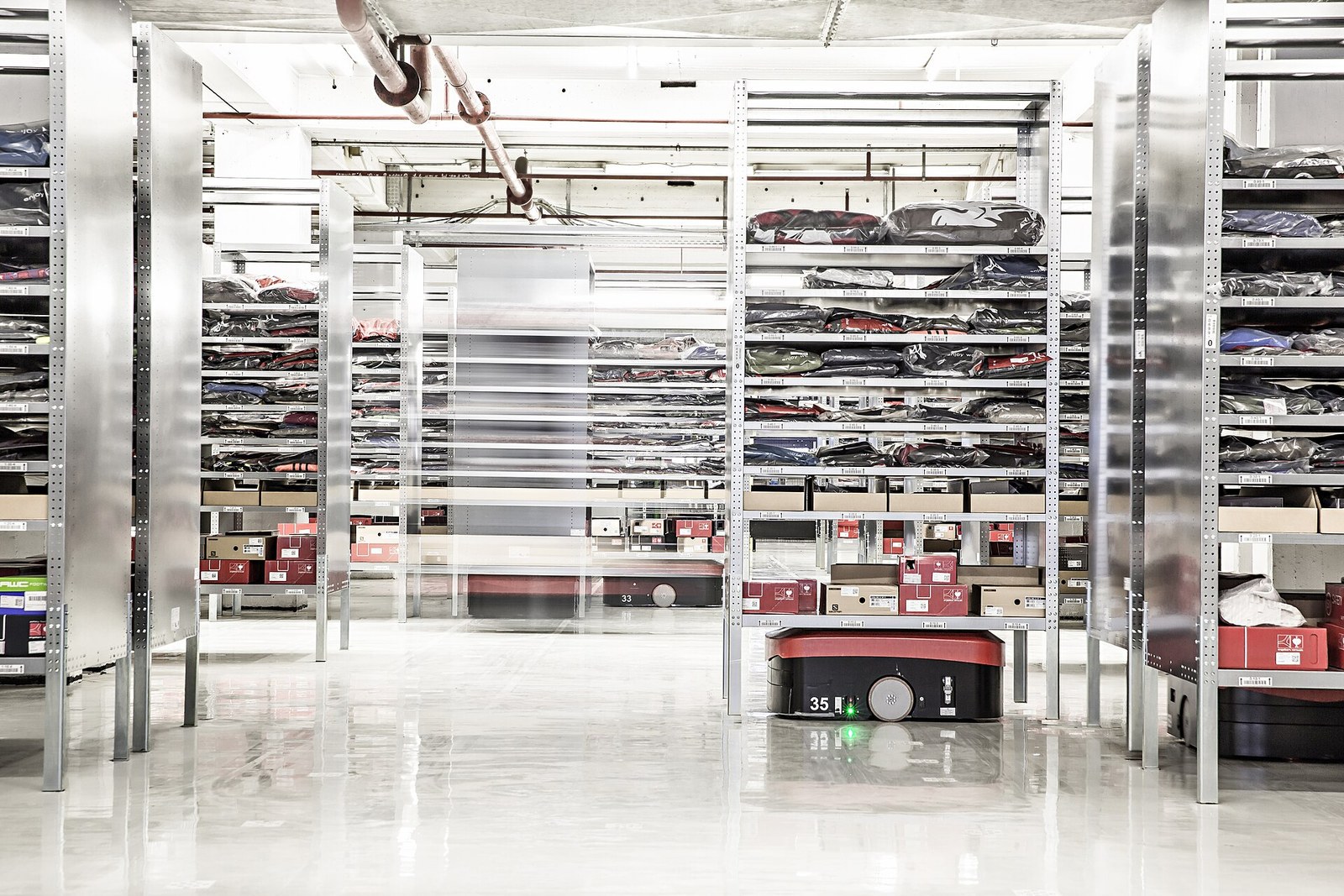
The second is charging and maintenance. Robots are not perpetual motion machines. Running around the clock means a pool of machines rotating through chargers, with the scheduler treating "go charge" as a task rather than an afterthought once a battery dies.
The third is how "continuous evolution" is measured. In engineering terms it means iteration speed: how many new policies ship per week, how they are regression-tested, how they are rolled back. Without those numbers, "evolution" stays a word.
Someone has already walked part of this road
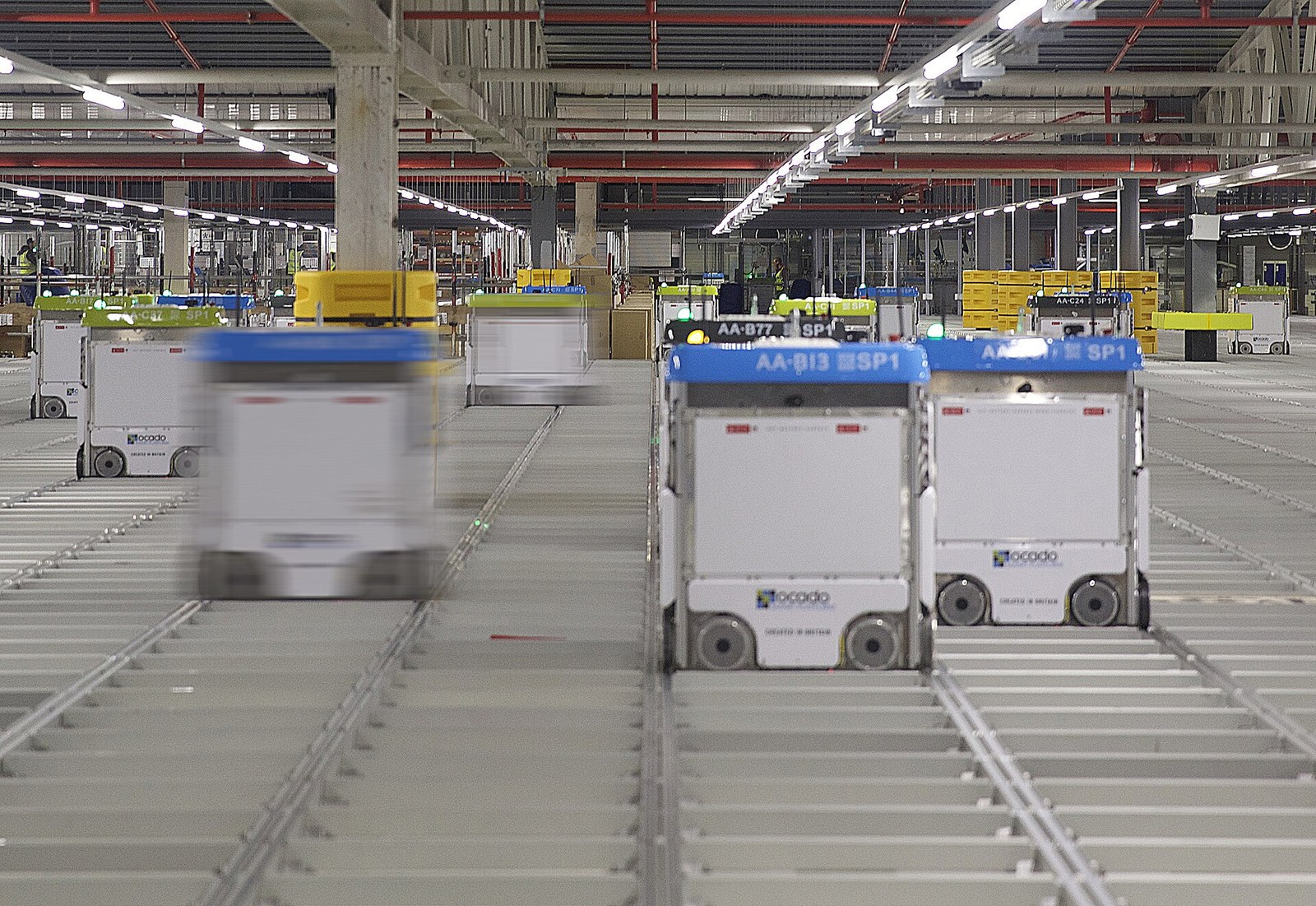
Britain's Ocado was among the first to turn grid-based robotic warehouses into daily operations, with thousands of machines moving bins across an aluminium grid while people handle picking and packing. Amazon's path after buying Kiva was similar: standardise the transport step first, then talk about the unmanned warehouse.
The shared lesson is that an unmanned warehouse is not built in one go; it replaces human actions layer by layer — the most repetitive transport first, then sorting, and exception handling last. Any plan to get there will likely follow the same order.
The word that matters here is "autonomous," not "unmanned." Unmanned only means nobody is present; autonomous means the system still makes the right decisions when nobody is. Between the two sits a whole discipline of exception handling.
This piece summarizes public reporting and did not independently verify vendor demos or experimental data. Not investment advice.