Melty Gym Turns Games Like GTA V Into Robot Training Grounds
Melty Gym turns games like GTA V into RL and eval environments.
Its research preview demos humanoid driving and rack work, without public sim-to-real results.
YC's Fall 2026 batch company Melty is treating game engines as robot gyms. Founder David Miller launched Melty Gym, a research preview that lets researchers drop their own models and robots into existing games, then retune the mechanics, objectives, and team setups for reinforcement learning and evals. In the 33-second official video, a crowd of humanoids labeled Nutation Gimbal-1 gathers on a GTA V pier, follows a one-line prompt to steal and drive a car downtown, then cuts to a custom “Data Center” world and works the racks. This is a preview for research teams, not a generally available training platform.
Not another simulator built from scratch
Robotics groups usually invent the world: narrow hallways, stairs, doors that open, people who get in the way. Melty Gym starts from the opposite bet. Games already force players to plan many steps ahead, master fiddly mechanics, and coordinate a team. Instead of building those worlds again, the product turns them into adjustable training tasks, with a stated focus on spatial reasoning and multi-agent collaboration.
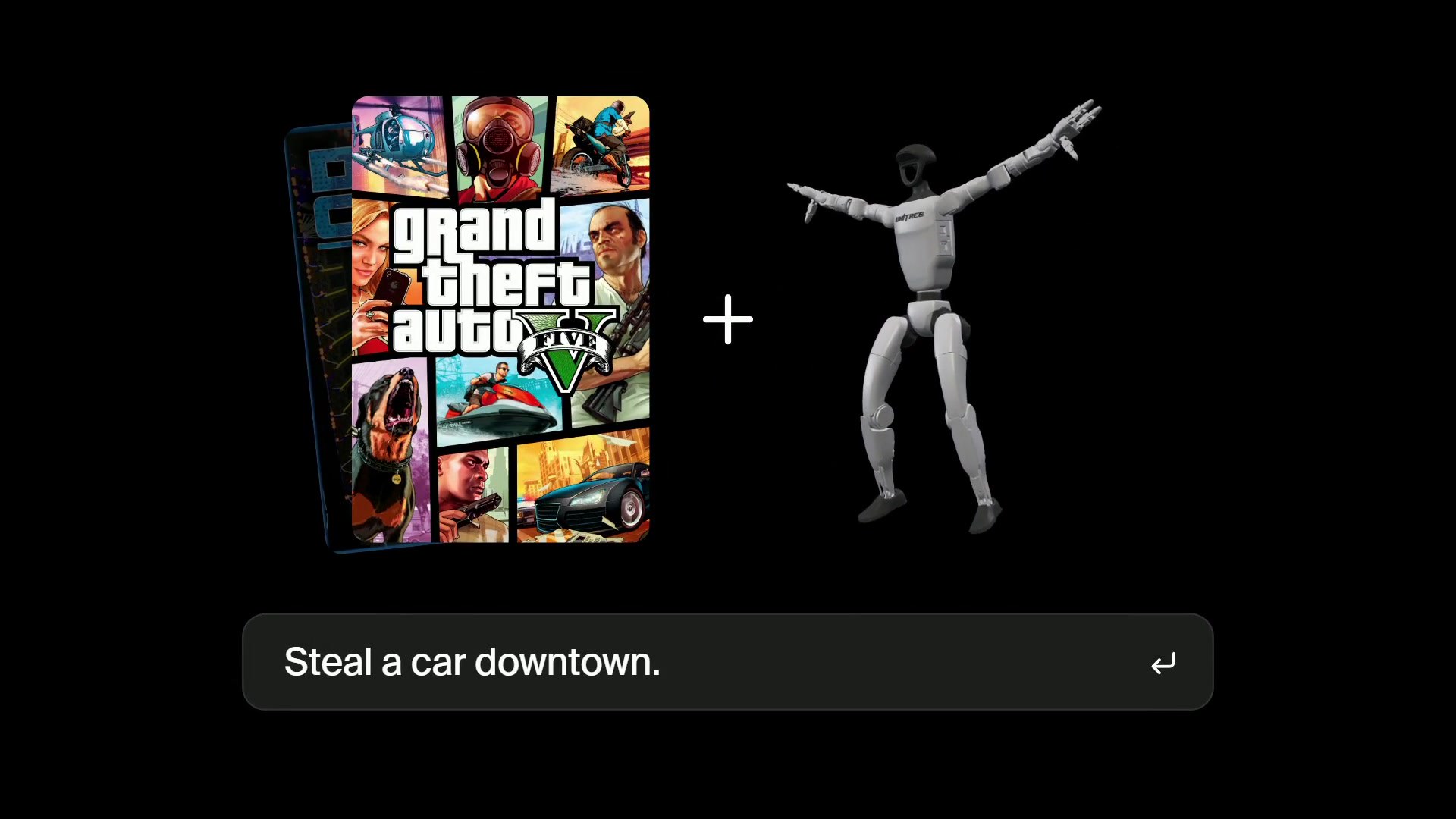
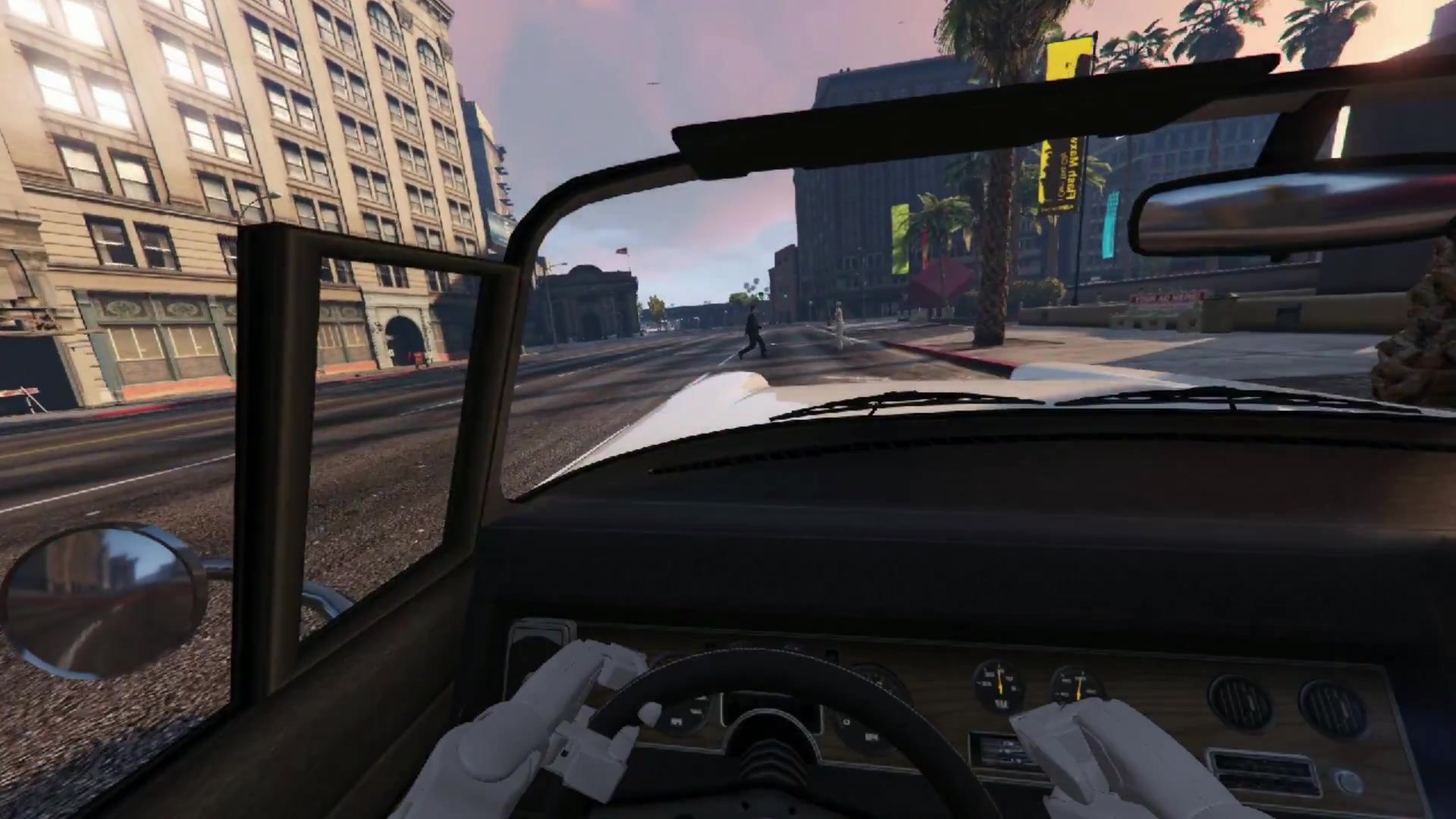
The demo compresses the loop to three choices: pick a game, drop in a robot, type a task. The first card is the GTA V cover art plus a humanoid with its arms out. The prompt is “Steal a car downtown.” Then comes a first-person sequence: a robot hand on the door handle, a climb into a convertible, white-gloved hands on the wheel, and a drive up the street.
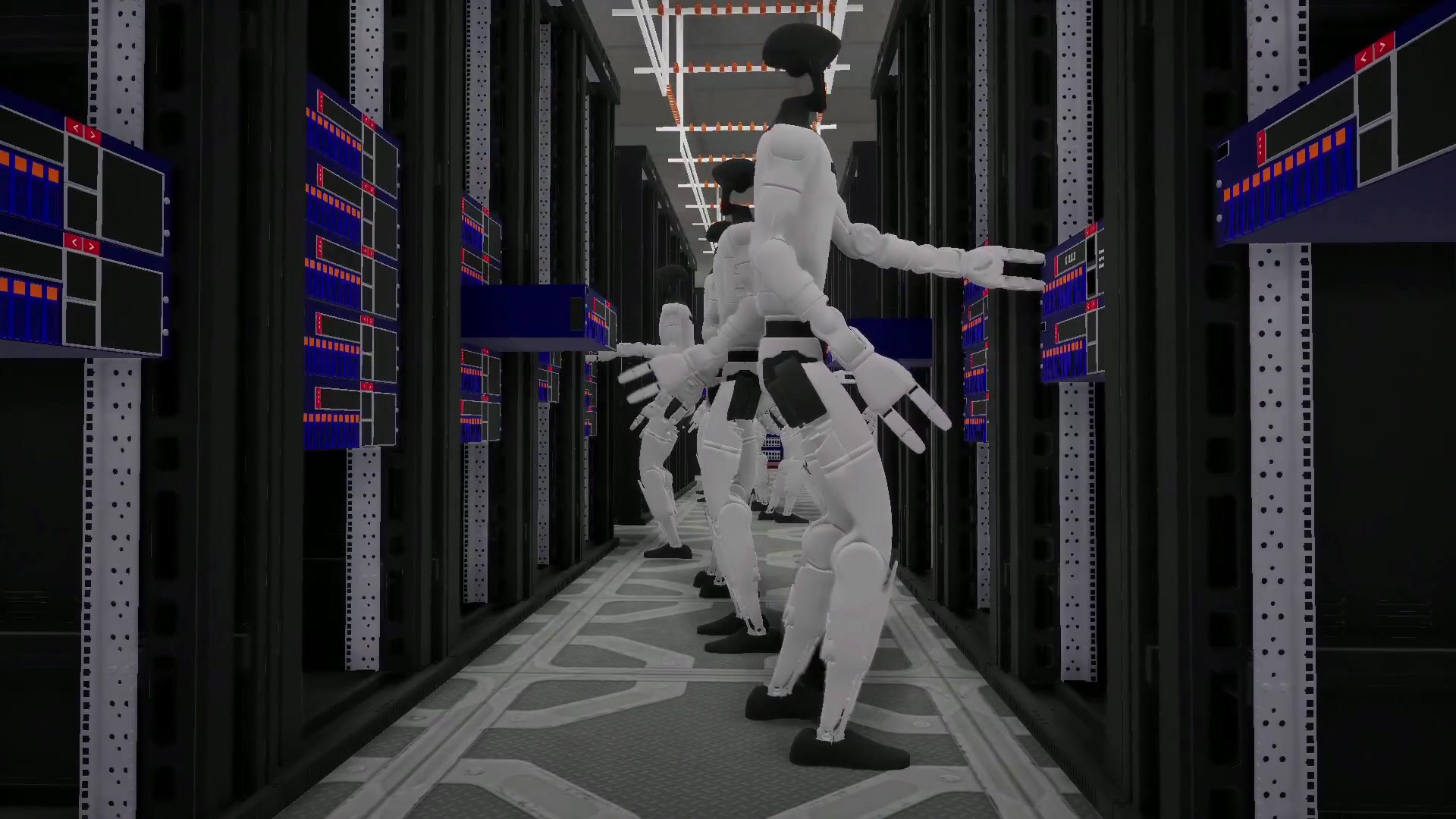
The second card swaps in a homemade “Data Center” cover. The prompt has barely typed “Now” before the shot cuts to a server aisle: a line of humanoids standing along the racks, reaching for the panels. The official write-up is explicit about the cut: gather and drive in GTA V, then work the racks in a custom data center. Same pipeline, different map and objective, different lesson.
Miller’s follow-up replies are more useful than the trailer for setting bounds. GTA, he said, is strong for social simulation and has some realism; for lab-style work he called Satisfactory and Abiotic Factor underrated. The video ran out of time, but they are also training in Cyberpunk. Asked about the stack, he said Melty already goes deep across major engines. Asked about scale, he called compute the bottleneck. And on whether these humanoids are ready for real streets, his own line was that they still need more cooking before they should drive in the real world.
It grew out of game mashups, and the limits come with that
Melty is not a new robotics lab. Miller left high school at 18 to build an AI coach for gamers, reached about 100,000 users, and was banned for being too strong. The company’s core engine decompiles and reworks games so people can combine worlds, change mechanics, and add large-scale multiplayer. Players have already made 3,500 mashups on Melty, played by about 170,000 people. The consumer client is a free Windows app, and mashups run on games you already own.
Gym is that same engine pointed at research and robotics. The launch materials also list adjacent pieces: Melty Net, which adds multiplayer of up to 256 players to games, mods, and mashups; Melty MCP, which lets a coding agent build a custom game from a single prompt; and Melty Chat, which edits gameplay in conversation. For a robotics team, the thing that matters is not another chat box for mods. It is whether you can change the rules to match an experiment: the same narrow corridor, a different end point, or another agent standing in the way, and you have a new training task. The company says it is already building custom tasks with teams, and that groups who need RL or eval environments should get in touch.
Two things the demo does not settle. First, there are no public sim-to-real numbers. Learning to open a car door, take a turn, or reach a rack in a game is not the same as doing it on a physical robot, on real stairs, with real door handles, in a real room. Game colliders are tuned for player feel; stairs are often ramps; the physics timestep and sensor noise are not a lab robot’s. Melty has not published a figure for how often a policy trained in GTA V succeeds on hardware. Second, the launch materials do not explain how commercial game licenses work when a title becomes a training environment. The consumer mashup product is clear that you must own the original games. How the research preview handles engine rights is not spelled out, and should not be read as solved.
What “research preview” actually means
The video ends on the Melty wordmark and a blue pill: Now in research preview. Miller later said the preview is live and asked people with a concrete research idea or use case to reach out. There is no open download, no public leaderboard, no pricing page, and no self-serve signup.
Reading this as “robots have finished training in GTA and are ready to work on a real floor” is a misread. What shipped today is a demo pipeline, a claim that existing games can be turned into tasks, and a door opened to research teams. Games really are one of the largest libraries of interactive worlds anyone has built. How much of what is learned in those worlds will transfer to a real server room or a real street is the question the first research teams will have to answer once they plug in their models and their robots.