GPT-Live-1.1 Hits the API: Same Voice as ChatGPT Plus, Idle Rate $0.02/min
GPT-Live-1.1 brings ChatGPT Plus/Pro's voice model to the API.
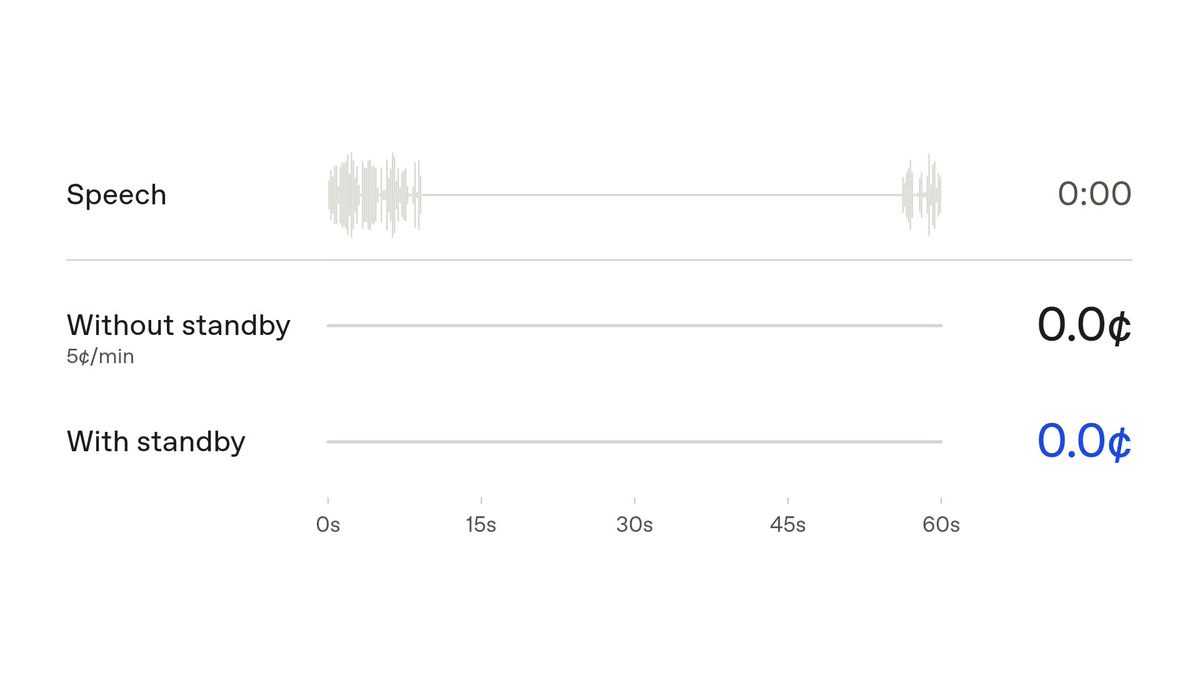
Active calls cost $0.05/min; WebRTC Standby costs $0.02/min.
The model that has powered voice in ChatGPT Plus and Pro since October 15 can now power your apps. At 04:00 Beijing time on November 20, OpenAI's developer account said GPT-Live-1.1 is available in the API. The model ID is gpt-live-1.1, on the existing Live endpoint v1/live/sessions. Active calls stay at $0.05 per minute, billed by duration, per second. New Standby drops WebRTC idle inference to $0.02 per minute.
This is not another ChatGPT Voice rollout. OpenAI is explicit: the model has been running inside Plus and Pro since October 15; what opened today is the API. GPT-Live-1 has been generally available in the API since September 10. Today's release is a named upgrade, plus an idle billing tier that works on both 1 and 1.1.
OpenAI says the improvements are specific. In multilingual conversations it pronounces more clearly, keeps a more consistent accent, and transcribes more accurately. OpenAI also reports it is more reliable at catching precise details like letters and numbers, following instructions, and handing complex workflows to a backend model of your choice without breaking the conversational flow. OpenAI's model card is shorter still: compared with GPT-Live-1, it transcribes more accurately and holds a more consistent accent and voice across languages. There is no public eval table, and no new Realtime endpoint — v1/realtime is still unsupported.

The new lever is the bill, not another voice endpoint
Standby is not a 1.1 exclusive. Both GPT-Live-1 and GPT-Live-1.1 WebRTC sessions can use it. Set an idle timeout between 5 and 60 seconds. After that silence, the model pauses inference, the call stays up, and the rate falls from $0.05 to $0.02 until someone speaks again.
A few traps belong in the cost model on day one. Muting the microphone does not trigger Standby; the session stays on the active rate. Standby is also not a free hold — $0.02 per minute still accrues through long gaps. OpenAI's cost guide is blunt: for long tasks, close the voice session, let the backend keep working, and start a new call when the user returns. Use Standby when you want the line to stay connected and merely make the silence cheaper. Creating a WebRTC session bills 15 seconds of voice duration by default at startup, then credits that against the running session; do not add another 15 seconds when you estimate cost.
Backend model and tool usage is still billed separately. The voice layer listens, speaks, and decides when to delegate: Responses delegation lets OpenAI run a backend model, or client delegation hooks up your own agent. Switching modes requires a new session.
The migration is narrow, but session limits are separate
In an existing Live session configuration, change the model to gpt-live-1.1. The getting-started docs now default to this generation. Inputs and outputs are audio and text; images and video are not supported. Streaming and function calling are. GPT-Live-1.1 and GPT-Live-1 have separate concurrent-session limits, each applied across inference regions, at whatever cap your organization has.
For teams already on GPT-Live-1, this is not a platform migration. It is a voice-frontend swap, plus an idle tier you can turn on today. Only two numbers need to go into the billing model: $0.05/min while active, $0.02/min only after entering Standby. Quiet time that has not entered Standby is still billed at the active rate. Whether the accent and transcripts are actually better is something to measure in your target languages and proper nouns — OpenAI did not publish a scoreboard this time.
The voice ChatGPT users have had for more than a month is now on the same Live API. The product shape of a voice agent did not change. What changed is that you can finally run the same-generation frontend as Plus and Pro, and you no longer have to pay full inference for silence once it has entered Standby.