
ACE Music v1 Tops AA Vocal Music at 1160, Edging Suno v6 by 16
On AA-Music-Vocal v1.1, ACE Music v1 is first at 1160 Elo, ahead of Suno v6 at 1144.
The 16-point lead sits inside overlapping 95% confidence intervals.
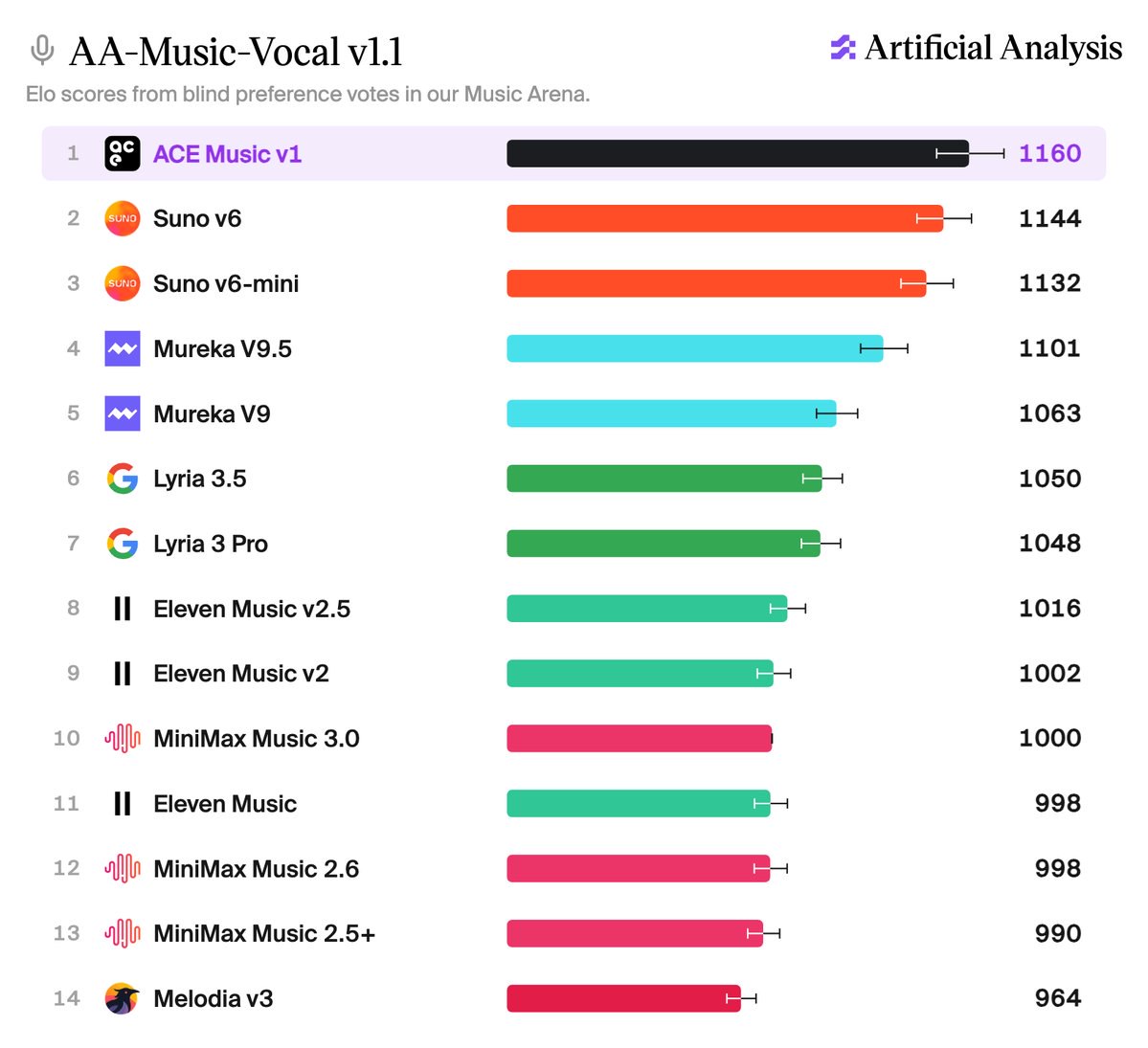
AI music has a new No. 1. Artificial Analysis updated AA-Music-Vocal v1.1 today: ACE Music v1 sits at 1160 Elo, with Suno v6 at 1144 in second and Suno v6-mini at 1132 in third. Below them: Mureka V9.5 (1101), Google Lyria 3.5 (1050), Eleven Music v2.5 (1016), MiniMax Music 3.0 (1000).
Before anyone writes "Suno dethroned": a 16-point lead sits inside the error bars. ACE Music v1's 95% interval is 1139–1181; Suno v6's is 1126–1162. They overlap heavily, and AA's rank ranges are 1–2 for ACE and 1–3 for Suno. This is a new leader, not a runaway. Past the top three, though, the gaps are real: Mureka V9.5 trails by 59 points, Lyria 3.5 by 110.
Who built it
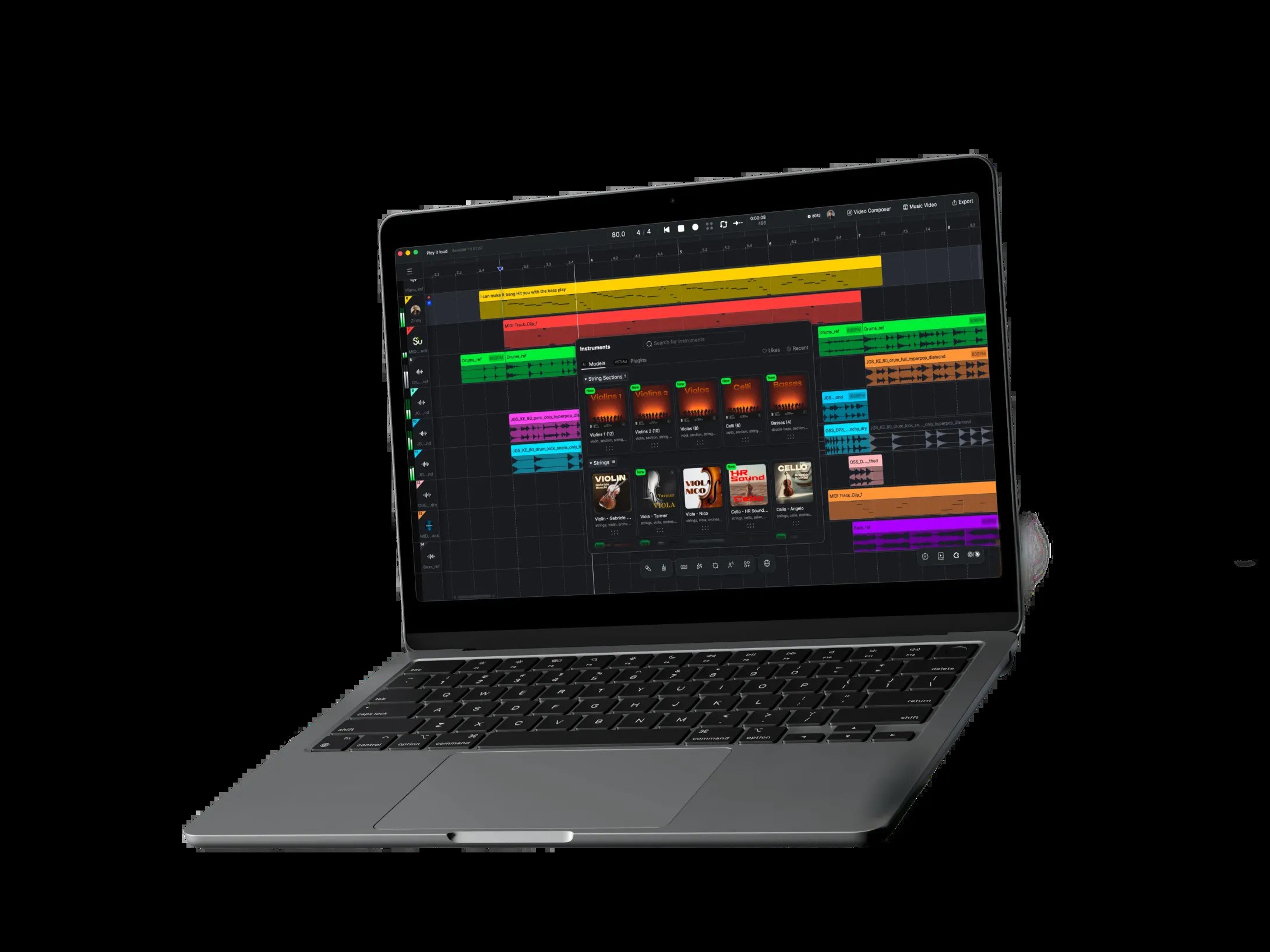
ACE Music comes from ACE Studio, founded in 2018 in AI singing voice synthesis. Its flagship is an AI music workstation that turns MIDI and lyrics into vocals for professional producers. The team also co-develops ACE-Step, an open-weights family of music generation models, with StepFun.
So this isn't a gen-music startup out of nowhere. It's an eight-year vocal-synthesis specialist beating the generalist on full-song generation — on the vocal leaderboard specifically.
In AA's testing, ACE Music v1 does best on Reggae / Dancehall and Classical / Orchestral prompts: one rewards groove and vocal delivery, the other arrangement and voicing. Neither has much to do with "catchy pop."
Access and pricing
ACE Music v1 has no API. It runs only in the ACE Music web app:
- Free: 20 credits a day, up to 10 songs; no downloads, no commercial rights.
- Creator: $7.90/month billed yearly, 1,000 credits/month, up to 500 songs, downloads, commercial use, stem splitting.
- Artist: $16.58/month billed yearly, 2,500 credits, up to 1,250 songs, plus ACE Studio access.
Each generation produces two songs for 4 credits. Note the split: the open ACE-Step 1.5 model on the same site is unlimited, with MP3 downloads and commercial use. The open model is the free tier; v1 is the product.
The more interesting release is v1.1 Preview
ACE's site already lists ACE Music v1.1 Preview, and it works differently: it writes a score in ABC notation (melody, rhythm, chords) first, then generates audio. Compose first, perform second. You can start from humming, a keyboard melody, or an uploaded MIDI file, edit melody and chords in the Songwriting Assistant, and regenerate. The same score gives a new "performance" on every run.
For production work, that matters more than the leaderboard. The core weakness of end-to-end audio models is that you can't steer or edit them. A symbolic layer in the middle turns melody and harmony into editable, exportable objects, and eligible plans can already export the main melody and chords as a score or MIDI. That is home turf for a DAW company.
The read
Suno's moat has been sound quality, ease of use and volume. ACE has shown that deep vocal expertise can match or beat it on blind preference, and it holds three more cards: a DAW, the open ACE-Step line, and a score-first generation layer. The gap is just as clear: no API, so developers and platforms can't build on it, and distribution runs entirely through ACE's own app.
Suno's next release could erase a 16-point lead. But the race in AI music has moved past "who can generate a song" to "who lets you edit one."